Review: Satisfaction by Nina Bouraoui

‘Memory is cruel, we call on it to rekindle burnt out fires, but with the years, it fades, leading us down phantom paths, like beggars searching for traces of our past, towards houses that never existed. Memory is their punishment, mine lay in my beginning. Violence endures, its medusa-like tentacles live on. I have become a second-generation coloniser. I shall not be loved here.’  
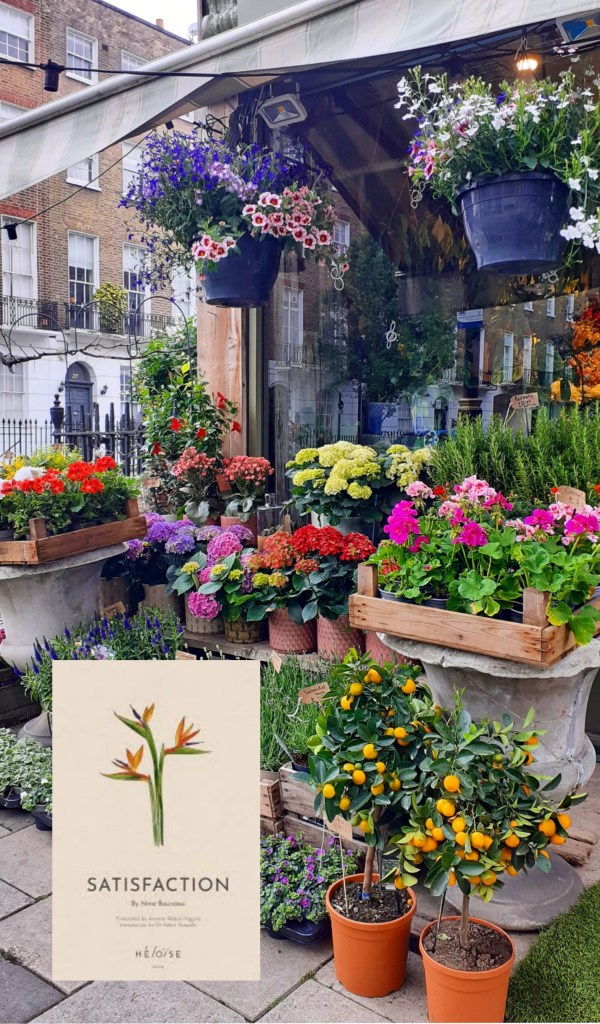
Satisfaction is a complex cocktail of jealousy, desire and self-loathing, set against the backdrop of a nation in recovery, where the scars of violence run deep. In her ‘notebooks of shame’, Michèle Akli, a Frenchwoman living in Algiers with her husband Brahim and their son Erwan, lays bare intense feelings of yearning and envy, rooted in a crippling fear of losing her child’s affections. Though undoubtedly aware of her own paranoias and prejudices, even denouncing herself as a ‘leech mother’, she is unwilling, or perhaps unable, to disentangle her sense of self from the boy. 

This emotional turmoil reaches a pinnacle with the introduction of Erwan’s friend Bruce, and her mother, Catherine, who subsequently becomes the obsessive focus of all Madame Akli’s repressed frustrations and desires. A considerable part of the two women’s association is fabricated, built from imagined scenarios and conversations that the protagonist plays out in her mind; this parallel experience remains unvalidated by the subject of her fantasies, thus, these repeated thoughts become a form of masochism. It is unclear how much of the infatuation is specific to the character of Catherine, or whether it could have attached itself to any individual who appeared at this moment in time, a diversion for the inner turbulence she was experiencing. 

Michèle’s relationship with Bruce is even more convoluted; her open contempt towards her son’s friend is uncomfortable at best, and ruinous at worst. Their interactions reveal the narrator’s nihilistic attitude towards women, laced with what she herself identifies as ‘latent misogyny’. She surmises that Bruce has taken the name of her idol, Bruce Lee, in ‘a bid to alter her fate’ and that ‘male violence has drawn out her femininity’. There is an indirect connection here to an earlier comment on clothing, as the notebook’s author admits to consciously choosing loose-fitting garments -’long skirts don’t arouse any desire’ – as a protective measure against the attention of men in the city and the danger this represents. Femininity is stifled by an instinct of self-preservation. Considering this, could it be suggested that an element of this misogyny is born of fear and vulnerability, and resentment of these sentiments? 

There is a duality to Madame Akli’s gendered hostility; it’s tied up in both the threat of violence from men and of competition from other women, for the attention of the male figures in her life.  

‘I never wanted a second child, I didn’t want to risk having a girl, I wouldn’t have known how to bring her up, I’d have been jealous of her relationship with Brahim, with Erwan. I’m the only woman in my household, the mirror image of Catherine. Women don’t like other women.’ 

This final statement reiterates a darker undertone in the exchanges between Michèle and Catherine – though outwardly admiring of this new female presence, she is also envious. Simultaneously, it sheds light on the conflicts at the core of the former’s relationship with Bruce. On the one hand, there is concern that Bruce’s distortion of traditional gender boundaries will influence Erwan; his mother doesn’t want to think of him ‘playing the girl’, thereby making him as fragile as she perceives the position of women in Algiers to be. On the other hand, any friendship between her son and Bruce is a risk to the maternal bond and it seemed, at least to me, that this was far greater fuel for her animosity than Bruce’s androgynous presentation.  

Laden with visceral sensuality and evocative description, Satisfaction is a chronicle of envy, longing and pain, and an important contribution to the growing catalogue of translated fiction in the UK. As Professor Helen Vassallo writes in the introduction to the novel: 

‘[The fact] that Bouraoui’s work sits so well with such a range of titles (commissioned in translation by a variety of publishing houses) is a testament to both its literary merit and its universal appeal. It also highlights the importance of making space for women’s writing – particularly texts from other cultures that focus on marginalised experiences – in the Anglophone literary market, an endeavour that characterises the work of Héloïse Press’  

Satisfaction by Nina Bouraoui (translated by Aneesa Abbas Higgins), Héloïse Press, November 2022
Review: What Concerns Us by Laura Vogt

She was missing something, she realised with painful awareness. But what? At some point Boris would leave, she thought. It would be easy for him, without the burden of motherhood …‘  

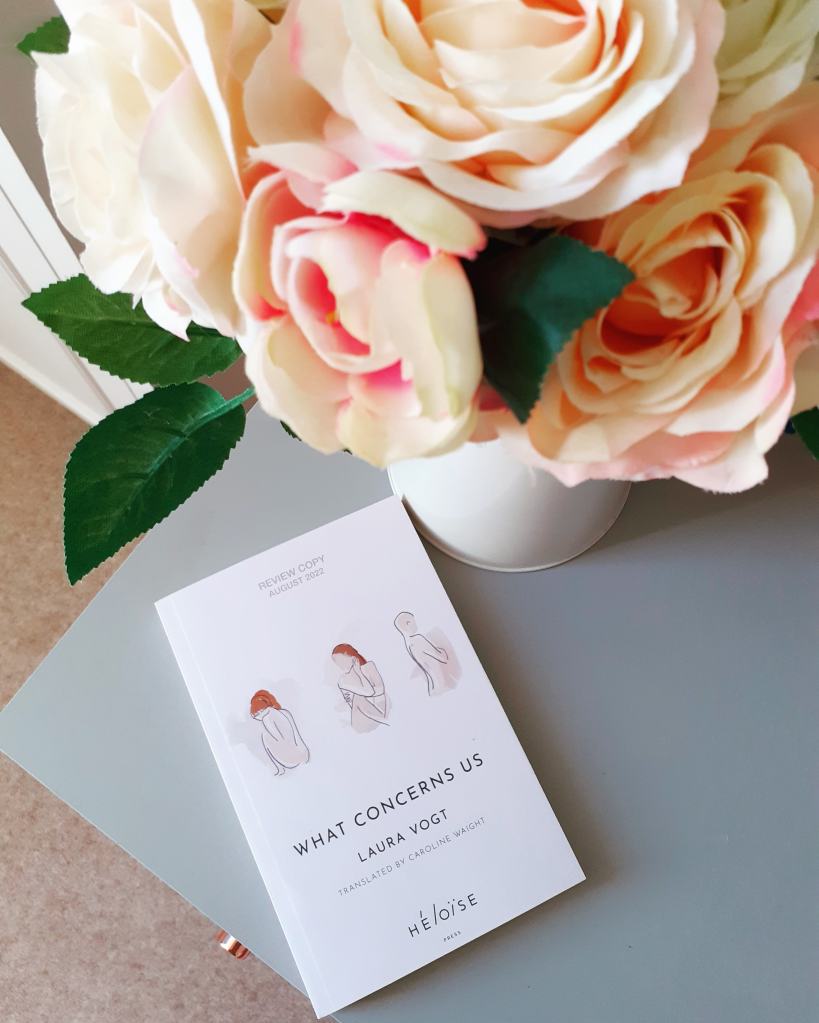
Through the lens of three interwoven lives, What Concerns Us (Was uns betrifft) explores themes of abandonment, dissociation and desperation. Vogt examines the complexities of motherhood, shedding harsh light on how its mental and physical tolls can extend far beyond birth.  

Having found stability in a traditional family model for her first pregnancy, albeit achieved in an unorthodox manner, the birth of a second child disturbs Rahel’s hard-won peace. The struggle to connect to her new-born daughter, Leni, unsettles the household she has carefully crafted to be entirely unlike her own childhood. These difficulties prompt Rahel to reflect on a strained relationship with her own mother, Verena, detached and selfish following the departure of Erik, father to Rahel and her younger, free-spirited sister Fenna. 

‘You know her. She’s a house of a hundred rooms. 

Hundred and fifty, at least, said Rahel’ 

Across several overlapping timelines, the elder daughter grapples with intense feelings of resentment and anger towards her remaining parent, and inherent differences with her sibling. Charged interactions between the three are a continous reminder of familial trauma – shared but interpreted quite differently – that has echoed through decades, shaping the sisters’ lives, relationships and their own ideas of parenthood.  

Gender politics play their part; growing up in an all-female household has resulted in a suspicion of men. Having been abandoned by both Erik and Martin, her first child’s biological father, Rahel expects the same behaviour from her partner, Boris, and is deeply mistrustful when he doesn’t fit the pattern she recognises. The two sisters are confronted with their own expectations of femininity; questioning the consent of an interaction with her partner Luc, Fenna concludes violence is in his nature and it is her role to be submissive. Meanwhile, Rahel’s believes she is not meeting the standards for a mother and wife. Showing clear (at least to the reader) signs of postnatal depression, she assumes Boris blames her for this and resorts to self-destructive behaviours, as if trying to prove her own fears.  

What Concerns Us is Laura Vogt’s second novel and the first to be available in English. Translated by Caroline Waight, it will be published by Héloïse Press, an independent publisher specialising in contemporary female writing, with a focus on ‘intimate, visceral and powerful narratives’. Established in 2021 by Aina Martí, their beautiful covers are instantly recognisable and they offer a subscription model, similar to that of Peirene Press, for readers to enjoy. Upcoming titles include The Memory of the Air by Caroline Lamarche (September) and Satisfaction by Nina Bouraoui (November).   

Indie Insider Issue 24 – Women in Translation – is out now! Also featuring Comma Press, And Other Stories, 3TimesRebel Press and Tilted Axis Press 📚

Women in Translation Month

It’s August, which means Bookstagram is full of incredible Women In Translation Month features! As someone who avidly reads both translated fiction and work by women writers, it’s like Christmas come early (to the extent that I briefly considered adding ‘It’s the Most Wonderful Time of the Year’ as a backing track for this post …)

Here are just a few of my own picks:


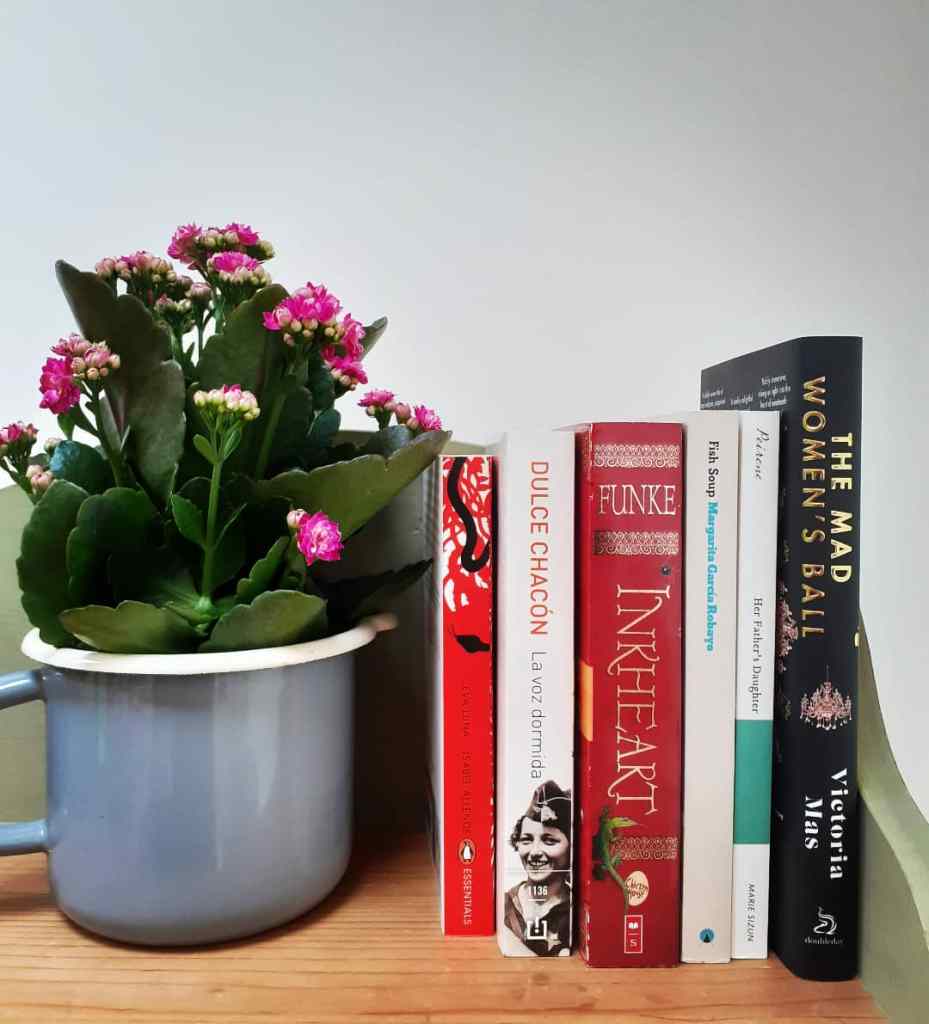
🇨🇱 Eva Luna – Isabel Allende (transl. Margaret Sayers Peden)

This has been on my TBR list of a while, ever since I read and loved The House of Spirits. Allende’s prose is beautiful – I always find myself utterly immersed in the worlds she creates.

‘My name is Eva, which means “life”, according to a book of names my mother consulted. I was born in the back room of a shadowy house, and grew up amidst ancient furniture, books in Latin, and human mummies, but none of those things made me melancholy, because I came into the world with a breath of the jungle in my memory.’


🇪🇸 The Sleeping Voice/La voz dormida – Dulce Chacón (transl. Nick Caistor)

This is severely underrated novel – if you are a fan of historical fiction, I cannot recommend it enough! Set in a women’s prison during the the Spanish Civil War and based on historical accounts, it follows the lives of Hortensia and her fellow inmates, deftly switching between timelines and characters to reveal a wider picture of the horrors many suffered at this time. I first read it in English translation at university and was blown away by the emotional impact of Chacón’s writing.

I only have the Spanish copy as I am now attempting (with varying degrees of success) to read it again in the original, but the English version is widely available and a must-read!


🇩🇪 Inkheart/Tintenherz – Cornelia Funke (transl. Anthea Bell)

A childhood favourite – every bookworm I know would give a right arm to enter their favourite fictional worlds. Premise aside, Cornelia Funke is a natural-born fantasy writer and Anthea Bell’s translation is beautifully fluid. Once you’ve raced through this trilogy and have been firmly converted to a fervent Funke fan, there’s also The Thief Lord and Dragon Rider awaiting you.


🇨🇴 Fish Soup – Margarita García Robayo (transl. Charlotte Coombe)

Another TBR that I’m very excited for! I have followed Charco Press for a while now; their work bringing Latin American authors to the forefront is incredible and I’m sure this is the first of many, many purchases.

“Throughout the collection, García Robayo’s signature style blends cynicism and beauty with an undercurrent of dark humour. The prose is at once blunt and poetic as she delves into the lives of her characters, who simultaneously evoke sympathy and revulsion, challenging the reader’s loyalties as they immerse themselves in the unparalleled universe that is Fish Soup” – https://charcopress.com/bookstore/fish-soup


🇫🇷 Her Father’s Daughter/ Le père de la petite – Marie Sizun (transl. Adriana Hunter)

I bought this immediately after finishing Adriana Hunter’s translation of Winter Flowers by Angélique Villeneuve, also published by Peirene. Upon reading the blurb, the premise is remarkably similar – a father returning home to his family and the ensuing complications, set against the backdrop of war-torn Paris. I like the subtilty of Winter Flowers so hopefully that bodes well.


🇫🇷 The Mad Women’s Ball/Le bal des folles – Victoria Mas (transl. Frank Wynne)

This was very much a “bookstagram made me do it” purchase. I am intrigued by the trope of women and madness; I read Gilbert and Gubar’s work cover to cover while studying and each fictional exploration of the topic brings a new perspective to light. Moreover, Gothic fiction is right up my street so tentatively hoping this one will be a 5* review.

“A darkly sumptuous tale of wicked spectacle, wild injustice and the insuppressible strength of women” – Emma Stonex, author of The Lamplighters