‘We each had one eye on the clock. Hers was to remind herself of how much longer she had left as the centre of my universe. Mine was to decide on the right time to leave her’.
Not a typical read for me – I don’t gravitate towards mysteries or thrillers, but this was a book club recommendation and it’s always good to try something different – I need to leave my historical fiction comfort zone now and again! In terms of genre, it straddles several categories in my opinon – family drama, mystery, thriller and crime at times. I’m afraid my review is not entirely spoiler-free; so much happens in this book that it would be difficult to give any sense of the story without a few hints …
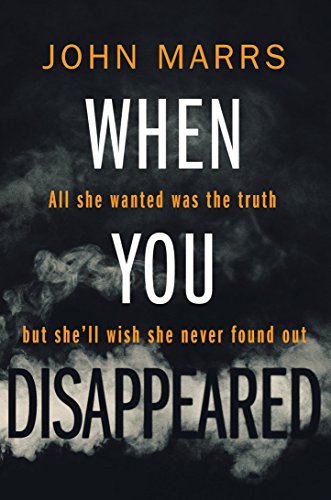
Blurb:
‘All she wanted was the truth, but she’ll wish she never found out.
When Catherine wakes up alone one morning, she thinks her husband has gone for a run before work. But Simon never makes it to the office. His running shoes are by the front door. Nothing is missing—except him. Catherine knows Simon must be in trouble. He wouldn’t just leave her. He wouldn’t leave the children. But Simon knows the truth—about why he left and what he’s done. He knows things about his marriage that it would kill Catherine to find out. The memories she holds onto are lies. While Catherine faces a dark new reality at home, Simon’s halfway around the world, alive and thriving. He’s doing whatever it takes to stay one step ahead of the truth.
But he can’t hide forever, and when he reappears twenty-five years later, Catherine will finally learn who he is.
And wish she’d stayed in the dark.’
What I liked:
The first few chapters quickly draw you in to the story and the lives of Catherine and Simon. The rapid chronology jumps are a little disconcerting at first, but once you have a better understanding of the key players, it’s easier to follow, and works as a tool to increase narrative pace.
I particularly liked the technique of mirroring of Catherine and Luciana’s lives, with their illnesses and the empathy this brings to Simon and Catherine’s encounter in the present day of the novel. I think this is a really effective and interesting section – probably the one I appreciated the most.
I genuinely wanted to know what happened next – Simon’s reason for leaving is alluded to from the start, built-up as horrific and life-changing but without giving too much away – a marker of genre, I guess. Due to stalling pace in the middle, this nearly became a DNF, but the main thread of the ‘the terrible thing’ kept me reading to the end to find out.
What I liked less:
Despite a promising start, the pace throughout the mid-section of the book really dragged and the plot became fragmented, each part seeming slightly disconnected from the last. I think this was largely due to the flitting backwards and forwards between several versions of the past and present. Although this was initially a useful approach for increasing pace, by the middle it was interrupted the flow of the narrative
Personally, I struggled to connect with either main character (Simon more so, though I guess that’s a slight relief due to his psychopathic tendencies …). By the end, I disliked them both; they felt synthetic in some way, which, on the face of it, is a completely ridiculous statement given that they are both fictional characters but that’s the word I associated with them.
Although in theory a ‘realistic’ novel, there were several events which bordered on fantasy. Large portions of the plot seemed overly contrived – there were too many improbable events and coincidences, from the chance online communication between James and Luca to Simon’s encounters with Paula and then Darren’s brother on the other side of the world. The Italian section with Simon and Luciana had the feeling of a Hollywood style rags-to-riches story, idealistic and overly perfect, which didn’t fit tonally with the beginning or end of the book. One or two of these elements might have passed me by, but so many far-fetched occurrences pulled me out of the narrative; I was too busy being cynical to get lost in the story.
I’m always hesitant to criticise a book someone has spent so much time planning and writing, but this didn’t strike a chord with me. That being said, others in my book club raved about it, as with everything – as with every book, it’s clearly a matter of personal taste.
 Bookishly Abroad