https://tinyletter.com/theindieinsider/letters/issue-18-all-about-love
‘Latchkey ladies, letting themselves in and out of dismal rooms, being independent and hating it. All very well for people with gifts and professions, artists or writers. But for us, the ordinary ones, a latchkey is a terrible symbol …’
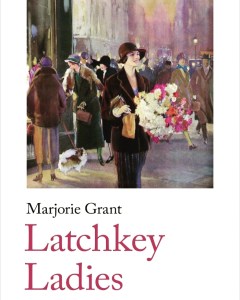
First published in 1921, this edition of Marjorie Grant’s Latchkey Ladies is the next in the Classics series from Handheld Press, reviving forgotten works of fiction that have fallen undeservedly out of print.
Detailing the lives of several so-called ‘latchkey ladies’ living in wartime London, Grant writes polemically. The novel is laden with caustic cultural critique and sharp social observation; musing on the habits of writers, for instance, she observes ‘They either told you carefully rehearsed impromptu stories that were good enough, or else they sat in anxious and jealous silence afraid of losing money or reputation by giving away an idea or a phrase’.
For the main characters, their keys to rented rooms are emblems of both independence and instability, set against a backdrop of war that feeds each element and amplifies their contradictory position. The story’s premise and tone reminded me of another post-war narrative, Mary McCarthy’s The Group, instead set in 1950s New York. Both authors, through characters like Anne and Lakey, present cynical world perspectives; the girls are prone to premature judgement in their detailed, witty but often damning descriptions of those they encounter. The Group itself inspired Candace Bushnell’s Sex and the City and it is easy to draw certain parallels between the three works; shared themes of marriage, children and female friendship are addressed with alternating humour and gravitas.
Despite initial perceptions, Latchkey Ladies is not the novel of female empowerment you might expect. For the majority of the women, spanning a range of ages and experiences, this rootless lifestyle is borne of economic necessity rather than conscious choice, though this does not negate a degree of snobbery at the Mimosa Club. Far from relishing the independence a latchkey life allows, the overwhelming sense is that the residents would trade such freedom for the solace of their own home, and that the easiest way, often the only way, for a young woman to achieve this is through marriage. Grant does note that desire for the stability of marriage is not an exclusively female trait, as Dampier muses “it is not only women who marry for a home”. However, her novel indicates that, in the eyes of society, even “a bad marriage is better than no marriage for a woman”, and for the young female characters, an ill-suited match is certainly deemed preferable to the alternative – spinsterhood.
It is perhaps this tension that provokes conflict between the older and younger generations, each prone to make disparaging comments about the other. Female camaraderie within the spheres of the novel is flimsy at best, yet the latchkeys unite in their rejection of women sitting outside the realms of respectability, like Reggie. Thankfully, however, there is warmth and loyalty to be found in the friendship between Maquita and Anne, undoubtedly the most enduring relationship of the novel.
Additional thoughts*:
*couldn’t fit everything into the review 😅
- There is certainly an argument to present this as a novel of female camaraderie but I struggled with how swiftly this purported solidarity dissolved in the face of any perceived impropriety.
- Throughout, there is an uncomfortable, pervading obsession with ‘the right type’ or ‘our sort’ of people, even from the younger girls who otherwise pride themselves on being more liberal than the likes of Mrs Bridson.
- However, this concern with manners and ‘correct’ behaviour doesn’t seem related to money, as we see in the case of Miss Pratt and her paid companion, Miss Denby – “the victims of Miss Pratt’s tongue said that it was easy to see which was the lady.” This non-pecuniary classism is the foundation of the Mimosa Club, designed to give “poor people who think they are a little too exclusive for ordinary boarding houses the illusion of privacy and comfort”.
- It struck me that the none of the male characters seem particularly happy or settled either: Robert is paranoid, Thomas is bitter and Dampier is contrary and dissatisfied.
If anyone else has read this one, I’d be very interested to hear your opinions! I still can’t decide if I liked it …
 Bookishly Abroad