Review: It’s a Sin

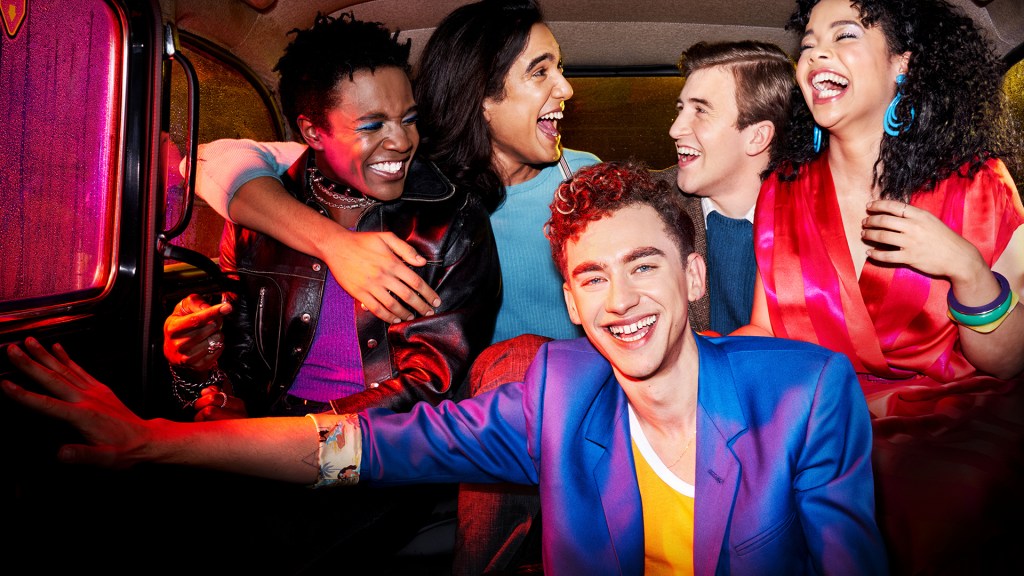
I came quite late to the party with Russel T Davis’ miniseries, It’s A Sin. You would need to live an internet-free existence to have escaped the online outpouring of love for the drama. As I do not, my expectations were high, and, even then, it exceeded them! The series extreme success is due to its witty script, phenomenal soundtrack and array of lovable yet imperfect characters, portrayed by an immensely talent cast; the audience connect with the storylines on a deeply human level. Crucially, the timing of its release was spot on. The series enters a society reconsidering its response to the AIDS crisis, and coming to terms with the full scale of its impact. The period is now far enough away to be analysed in hindsight, but not so historical as to be disconnected from our modern lives – my parents grew up seeing the AIDs tombstone advert on TV. Spotlighting the crisis now had prompted a new generation to ask questions, and older generations to reconsider their experiences. Simultaneously, though the two crises differ in many ways, this story hits a nerve in the context of the current pandemic.

What struck me most of all it how the conversations surrounding It’s A Sin has endured – a testament to its impact. In today’s world, new content has a limited shelf-life in the public sphere, often only a few weeks. Yet, months later, I am still talking about it and to people with whom I would not usually discuss such topics. The series has a place in the hearts of many and I have no doubt the conversation will continue.
Rating: 5 out of 5.

Review: Emma. (Autumn de Wilde, 2020)

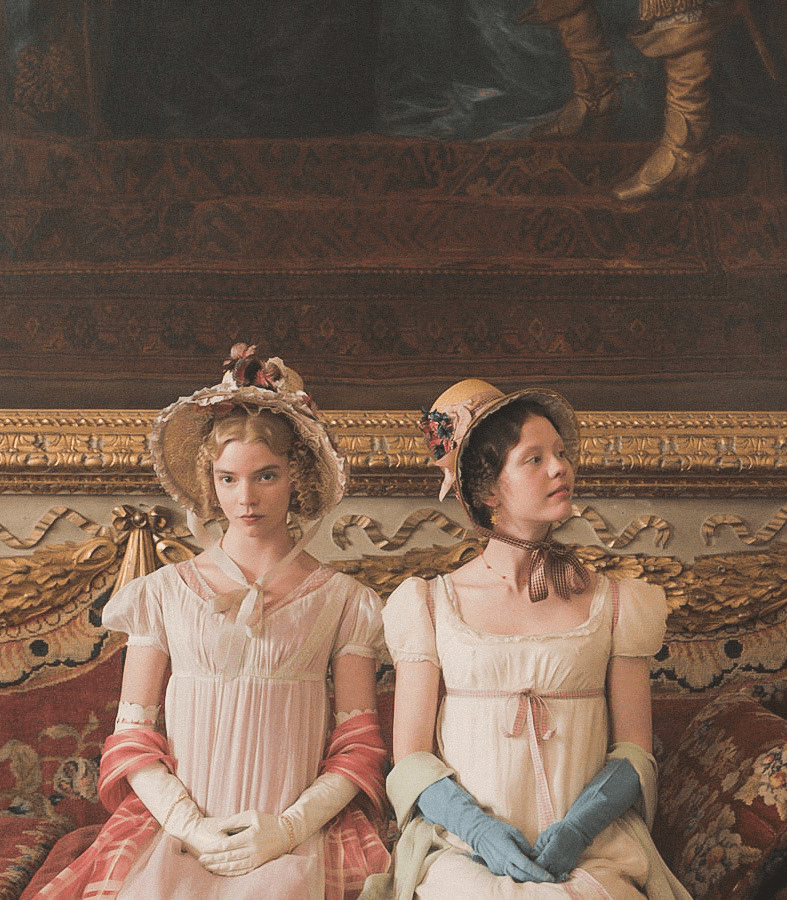
Emma (Anya Taylor-Joy) and Harriet (Mia Goth)

Adapting any Austen classic must surely be a daunting task for directors, screenwriters and playwrights alike. Yet, Autumn de Wilde has proven herself unfazed in the face of such a challenge, with her recent screen adaptation of Emma.

De Wilde’s interpretation of Austen is hyper-stylised and aesthetically pleasing, reminiscent in several aspects of Sofia Coppola’s Marie Antoinette (2006). With its strictly pastel colour scheme, pristine costumes and dreamlike quality, de Wilde’s directorial choices convey to the audience the world through Emma’s privileged eyes – that is to say, very much a rose-tinted view. The light-hearted melodrama of the film is accentuated by its soundtrack; Isobel Waller-Bridge and David Schweitzer’s whimsical compositions perfectly enhance the setting de Wilde has created. Yet the more earnest moments are marked by folk music, notably in the duet between Mr Knightley (Johnny Flynn) and Jane Fairfax (Amber Anderson). Flynn, himself a singer/songwriter, also contributes a track, aptly named ‘Queen Bee’, which plays over the ending credits.

Alongside the legendary Bill Nighy, the production boasts a stellar cast of young British talent: Callum Turner (The Capture) and Josh O’Connor (God’s Own Country) play Frank Churchill and Mr Elton respectively, with Anya Taylor-Joy (The Miniaturist) at the helm as the novel’s eponymous anti-heroine. This adaptation’s screenwriters offer an altogether more damning portrayal of the flawed protagonist than previous versions have shown. It cannot be easy to make a character simultaneously likeable and disagreeable, but the role is played to perfection by Taylor-Joy. Her spoilt, immature nature is further contrasted with Mia Goth’s representation of Harriet Smith: naïve, kind-hearted and endearing, if slightly ditsy. It is here, with this interpretation of Emma’s character, that the film really succeeds, setting itself apart from an illustrious company of Austen renditions. De Wilde hits the mark of overarching light-hearted optimism, without detracting from the fiercely satirical nature of the author’s work – a cinematic cocktail the great Jane herself would be proud of (once given a little time to adjust her 18th century sensibilities to the concept of motion picture …)

Austen devotees might be disappointed in the relative underdevelopment of Frank Churchill and Jane Fairfax as characters, but this does not detract from the success of the film. As with any adaptation, certain elements of the plot are prioritised, dependent upon the interpretation of the director. The ending also differs slightly from both the novel and previous screen versions, but the changes are in keeping with the nature of the film which, overall, is generally pleasing. Indeed, Mr Knightley’s infamous exclamation of ‘badly done’, is certainly not applicable in this case!

Rating: 4 out of 5.