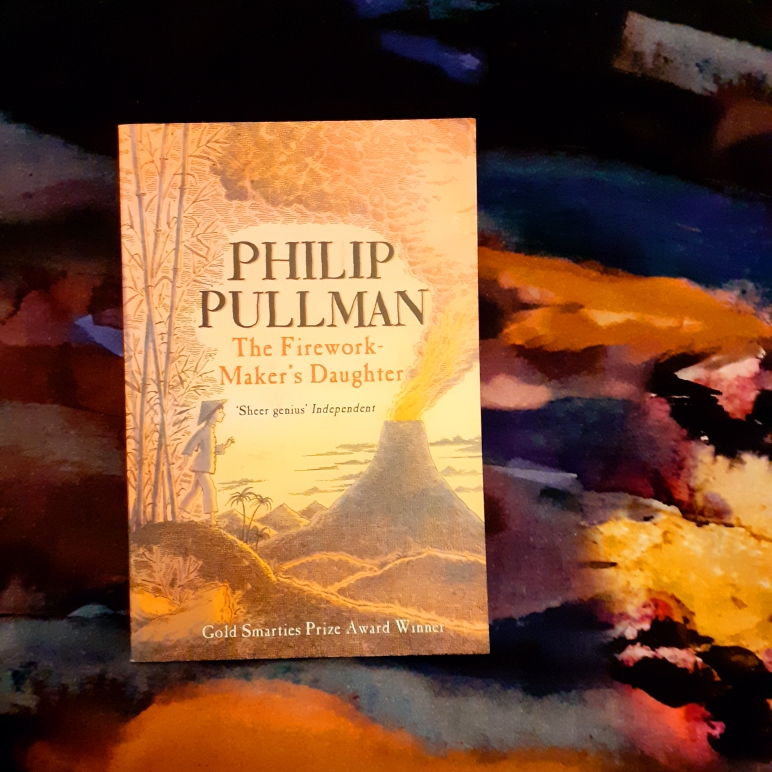
โWhen she was old enough to learn, her father began to teach her the art of making fireworks. She began with little Crackle-Dragons, six on a string. Then she learned how to make Leaping Monkeys, Golden Sneezes and Java Lights. Soon she was making all the simple fireworks, and thinking about more complicated ones.โ*
Lila has one wish: to be a Firework-Maker, like her father Lachland. To fulfil this, she sets off on the perilous journey to Mount Merapi, to obtain Royal Sulphur from the cave of Razvani, the Fire-Fiend. She navigates twisted jungle paths, outwits a bumbling group of river pirates/restaurateurs/barbershop singers and, with the help of her friends Chulak the Elephant Keeper and Hamlet, the King’s prized white elephant, returns to her hometown to save her father from certain death.
A magical, fairytale-esque account of determination, talking elephants and water goddesses, culminating in what must be the most enchanting firework display ever written!
โNow the King of that country owned a White Elephant. It was the custom that whenever the King wanted to punish one of his courtiers, he would send him the White Elephant as a present, and the expense of looking after the animal would ruin the poor man; because the White Elephant had to sleep between silk sheets (enormous ones), and eat mango-flavoured Turkish Delight (tons of it), and have his tusks covered in gold leaf every morning. When the courtier had no money left at all, the White Elephant would be returned to the King, ready for his next victim.โ
Paradoxically, I came to Philip Pullman’s children’s fiction as an adult, having read His Dark Materials as a child. Having read The Scarecrow and His Servant, Clockwork and now The Firework-Makerโs Daughter, I am impressed by the diversity of his writing style between the age groups. Just like this particular novel, I find his childrenโs fiction has a fable-like quality; there is a bedtime story tone to the tales (less so with Clockwork, due to the serious creepy factor โฆ). Though also fantasy, His Dark Materials dismisses this in favour of a realist, borderline nihilistic style. The series is a masterpiece but sometimes a whimsical short story is needed โ get you an author who can do both!
“They looked at each other as if they were strangers. Each of them had had quite the wrong idea about things, and they were both alarmed to find it out.โ
โญโญโญโญ
Rating: 4 out of 5.
* Loved the names โTumbling Demonsโ and โShimmering Coinsโ for her later inventions!
This hit me harder than expected! Initially I wasnโt sure it was for me but after a few minutes I was hooked and by the end I was near to tears.
The relationship between the narrator and his older brother Christopher is beautiful. Following the death of both parents, they rely their bond with each other while navigating a hostile world. Music plays a large part in this connection and description of the rap battle at the industrial estate was my favourite part of the narrative.
โThe world we frequented wasnโt built for with us in mindโ
โWeโre the wrong age, too young to be adults, too old to be children but stuck in bodies which implicated us both waysโ
โSilence morphed to quiet โ which is a different thing altogether and requires a very specific attention.โ
In the Car with the Rain Coming Down โ Jan Carson
I listened to this one immediately after Pray and, my, was it an abrupt change of tone This is what I love about the BBC Short Stories โ the selections are always so different! Jan Carsonโs piece delves into complex family dynamics and undercurrents of tension, some more overt than others. The โeverydaynessโ of this story was lovely, from the arguments about which car to take/who would drive to the sibling rivalry and teasing, to provision of Percy Pigs in an M&S bag. I especially warmed to the narrator and her acceptance of the disagreements but refusal to be deeply affected.
โSheโs made an effort for Williamโs birthday. Her toenails are pink to match her fingernails, though the effectโs muted by a layer of nylon tights, bamboo colour with a thick seam running across her nailsโ.
โWeโll congratulate the pair of them, weโll measure our words carefully, saying enough to cover ourselves but no more. Weโll accept a slice of Victoria spongeโ.
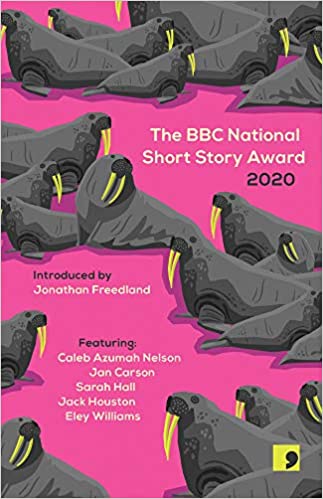
The Grotesques โ Sarah Hall – WINNER
2020โs winning story begins with the striking image of a homeless man mockingly made up as some form of grotesque Arcimboldo painting. The man, Charlie Bow, โbookendsโ the main part of the story; at the end a body, presumed to be his, is pulled out of the canal. Both events connect to the protagonist, Dilly, the first witnessed in person while the second she is only told about. Delilah, known affectionately, or perhaps only more conveniently as Dilly, is a young woman lost in her family, amongst confident siblings and an overbearing, even manipulative mother. The extent of this control is really only hinted at; in such a short story it is only possible to give an impression of the full picture, though this is arguably more effective, encouraging the reader to draw conclusions. There are discussions of a lost baby, therapy and partners seemingly pushed out of a prioritised family unit (Sam and Rebecca) โ โthe worst thing was to disaffiliateโ. I felt a level of sympathy throughout for Dilly, but I was also relieved when the story ended, as the suppressed tensions made me uncomfortable.
Come Down Heavy โ Jack Houston
Simone and Jackie are addicts sometimes in recovery. They live a hand-to-mouth existence on the fringes of society but find comfort in their relationship. Honestly, this was probably the story I enjoyed least, more for the style than the subject matter, though I liked the vivid sense of setting and necessity. The structure was quite unusual, with the pace of the story marking a pattern replicating hit to hit but I enjoyed the repeated technique of โwhat happened was โฆโ.
Scrimshaw โ Eley Williams
This was the shortest of the bunch and a slightly odd one โ the strap-line on the BBC website is โcautionary tale about late night texts and mating walrusesโ, which is wholly accurate. The wordplay was the best part for me โ it was so cleverly done! Iโd recommend listening several times to get into it and fully appreciate how clever this story is, once you get used to the uniqueness.
โI know that this causes three rippling dots to appear on your phone screen. These dots change in character depending on your mood: ellipses, Hansel and Gretel breadcrumbs, Polyphemusโ sockets, the side of a rolled dice. As I trialled potential first responder letters, the trailing three dots must be shifting minutely on your phone screen. Three dots undulating while I dithered, modulating the colour of the blue light hitting your face as you waited for my message to materialise. I drafted a breath then deleted it.โ
โI looked up synonyms for unhappiness and wondered where on the scale you might place yourself if given the option: cheerlessness, desolation, despair, despondency, dolefulness, downheartedness, gloom, gloominess, glumness, malaise, wretchedness. I would list them to you in alphabetical order like this so to not imply my own personal hierarchy in terms of the terms.โ
โBetter then to dwell apart from your unhappiness in my answer. You cannot be in control of another personโs feelings. Undwell, antidwell, disdwell, dedwellโ.
This shortlist was another really interesting selection! Though โThe Grotesquesโ is undoubtedly a worthy winner, my favourite of this round was โPrayโ.
I’ve recently been listening to the previous shortlists for the BBC National Short Story Award – available here or on the BBC Sounds app – and I wanted to write some mini-reviews. More of task than I had previously considered as, with less content to comment on, it’s very hard not to give too much away …
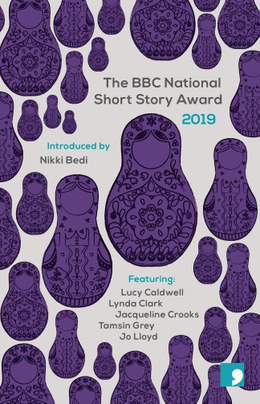
Silver Fish in the Midnight Sea โ Jaqueline Crooks
This presents a very deep sense of time and place โ I was completely absorbed in it. Crooks tells the story of Ycara, Macca and Carlos existence in their garden, in silence as their mother sleeps for her nightshift, with the echoes of island life left behind and the haunting, but intangible presence of Soundghost.
โSheโll be drifting soon, spliff burning. Dreaming sheโs buried in the garden with termites and millipedes crawling over her face, leaving slime and white powder trails. Dream-travelling back to the starfish island she came from fifteen years ago. An island that erupted from sea crust millions of years ago. Raining nightfall ashโ
The Children โ Lucy Caldwell
An exploration of motherhood, loss and pain echoing through generations; the themes join together several seemingly unconnected stories. Itโs told in three timelines, primarily that of the narrator, her family and hospital appointments. Through her research, this thread intersects with the life of Caroline Norton whose separation from her own children drove a lifelong fight for a change in custody laws and equality. She was also influential in the passing of the Marriage and Divorce Act in 1857. Between them, these two narratives make up the larger part of โThe Childrenโ with only a small section dedicated to a third story, that of children separated from their families on the US-Mexico border. Yet it felt to me that this was the true centre of the story, accentuated using the familiarity of one perspective and the historical context of the other.
โIโve just come from Girton College, the first womenโs college in Cambridge; dusty sunlight in high-ceilinged, book-lined rooms, parquet-floored corridors and a lunch buffet โฆ A communal jug of tap water, tasting faintly of pewter. Polite tones in respectable surroundings; it all sounds eminently reasonable; โ
โThe US president rants on Twitter, self-righteous or affecting outrage. I think of George Norton, suspicious, capricious, belligerent, ploddingly unintelligent. An ungovernable child, foaming and stamping and rambling from one accusation to another.โ
My Beautiful Millennial โ Tamsin Grey
Dido has recently moved to London and is finding city life not altogether as she expected. We learn of her dangerous encounter with a pigeon on the Underground and her unusual, disconcerting โfriendshipโ (of sorts) with Paul Fildes. At one point he refers to her as โ[his] beautiful millennialโ, a phrase which in context made my skin crawl. I didnโt connect with this one as much as some others, but this description of Didoโs โbreak-upโ outfit lives in my head rent-free …!
‘I have finally gone for my black velvet dress with the flouncy skirt, bottle-green tights and my lace-up boots. Amethyst lipstick. My strange curly hair in spikes. My Napoleon coat, black beret, black leather gloves. My green carpet bag, yes, the same green as my tights. Paul Fildes says I wear dressing up clothes, that itโs a sign of my arrested development. He has offered to take me shopping, but I am trying to disentangle myself from Paul Fildes‘
The Invisible โ Jo Lloyd โ WINNER
This was my favourite of the bunch, and (deservingly in my opinion) won the prize. Though you can read the stories in their respective anthologies, I would especially recommend listening to this one โ Aimee-Ffion Edwards lilting Welsh accent brings a new dimension. The inhabitants of a small Welsh village become obsessed with stories of the Ingrams, the invisible family living an opulent lifestyle right on their doorstep. The lives of the Ingrams are relayed to the villagers through Martha, the only go-between connecting the two worlds, though doubts and aspersions are cast upon her truthfulness, which in turn provokes rising tension. Despite this, the fantasy of the โInvisibleโ drags them through cruel winters and daily hardships. The detailed imagery of this story is utterly beautiful.
‘The Invisible do no workโ. โBut how can they live without the poor to serve themโ, we ask. โWhat about the puddingsโ, says Eliza. โAre they spiced? Do they wobble? Are they eaten hot or cold?’
“They are baked puddings, and boiled puddings, and set puddingsโ, says Martha. โWonderful domed and turreted puddings like palaces, thick with candied cherries and angelica. The custard is yellow as buttercups”
Ghillieโs Mum โ Lynda Clark
Ghillieโs mum shape-shifts into different animals, seemingly without reason or much control. At first I was a little confused by this one; I wasnโt sure if these changes were metaphorical, intended to represent physical or emotional difference of some sort. However, it seems to be literal, in a semi-magical realism style where strange occurrences are accepted. You will enjoy reading this far more by temporarily suspending disbelief! Though usual, the story was poignant and very moving.
‘In those early days, as far as he could recall, it was only at bath time she was other animals. A baby elephant to squirt him with water from her trunk, a porpoise to bat his rubber duck around the bath with her domed head, a dumbo octopus making him laugh with her big, flapping earlike fins, and grasping his bath toys with her many arms.’
‘Ghillie assumed everyoneโs mother was many things, and so didnโt worry about it at all for the first few years of his life, but when he started school, he realised his mum wasnโt like other mums. And that meant he wasnโt like other kids.’
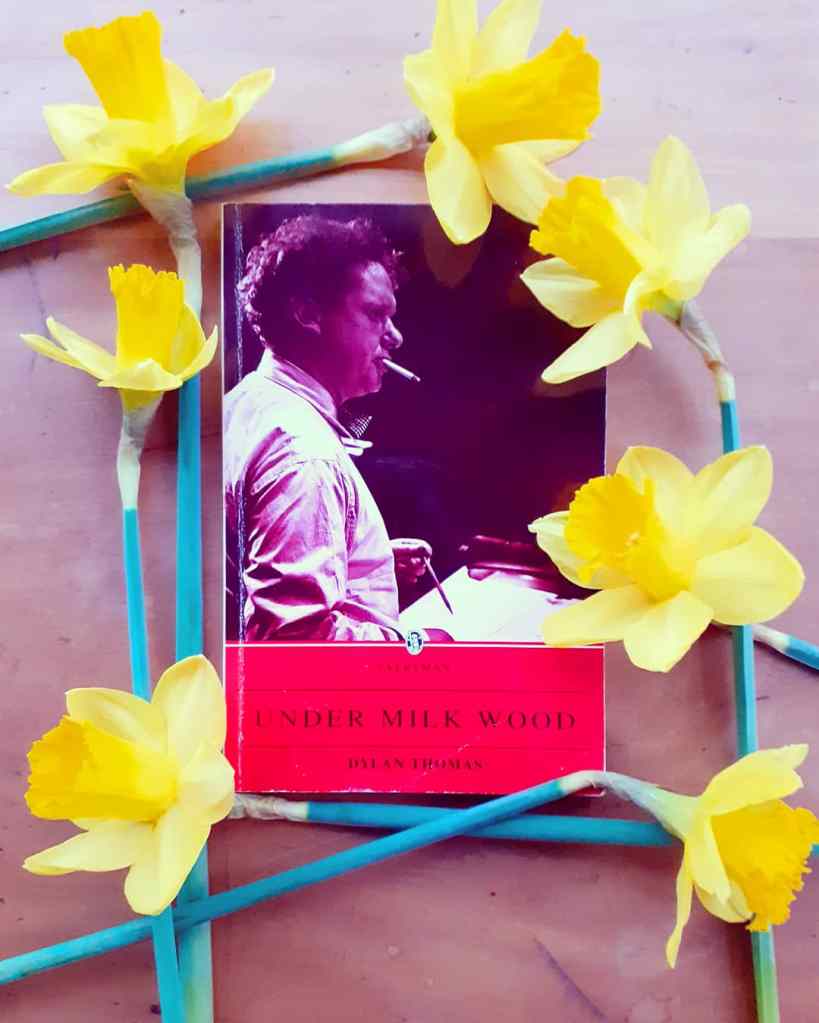
Somewhere in the ether is a photo of me with one of those silly daffodil hats that may surface some day for ‘meet the bookstagrammer’ but for now we’ll have to make do with Dylan Thomas.
Under Milk Wood is my first impression of Thomas’s work, despite living in Wales for several years ๐
Set in the fictional Welsh seaside town of LLareggub and narrated by the omniscient First and Second Voice, the story follows an array of eccentric characters going about their daily lives. I didnโt learn until after finishing the book that the name LLareggub, though it bears resemblance to other Welsh place names with the double โllโ, is actually a reversal of โbugger allโ – which just makes me appreciate the author’s humour all the more. Even better, according to reliable source that is Wikipedia, the townโs name is also the inspiration for the country LLamedos (sod โem all) in Terry Pratchettโs Discworld series novel Soul Music.
The very beginning of the play struck me most. With its stream of consciousness style and vivid dreamlike imagery, it reminded me a little of the oft-quoted ‘mad ones’ extract from Kerouac’s On the Road.
Poetic phrasing and prose are mixed throughout; Thomas also includes song lyrics. Reminded me of the mad ones excerpt from On the road, with the pace and vivid imagery. The mix of poetry and prose is very interesting; so much to pick out of just the first few pages. His style is unique and this read has definitely piqued my interest in his poetry โ at a brief glance, I’m intrigued by the titles alone!
As this work was written to be a ‘play for voices’, I wanted to experience it in the intended medium. Hearing the play accentuates ‘Under Milk Wood’s best features, the rhythm in particular. I would really recommended this version, narrated by Richard Burton. And there is apparently a 2003 BBc rendition featuring Matthew Rhys, Ruth Jones and Sian Phillips ๐คฉ
Original Title: Jeder stirbt fรผr sich allein (Every Man Dies Alone)
โIn other words, the Quangels were like most people: they believed what they hopedโ.
A longer than average review, but then I’ve had two years to formulate opinions about this book!
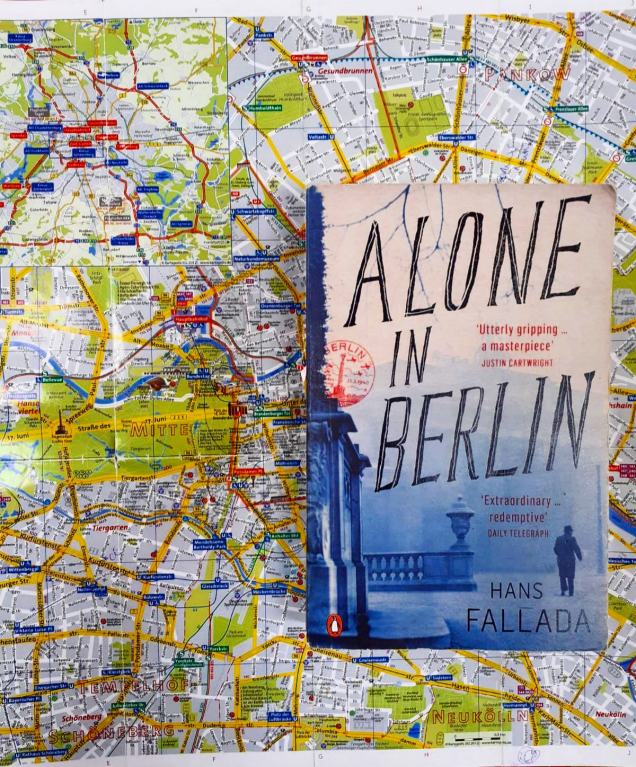
Well, it has certainly been an odyssey of a read! After a friendโs insistent recommendation, I read about a hundred pages in 2018, then picked up something else and forgot all about it. Even once Iโd restarted last February, it still took me the best part of 2020 to finish and yet, although the lengthy reading period implies otherwise, I genuinely enjoyed Alone in Berlin.
This novel is, in a word, dense โ not what I would classify as a light read, in either theme or style **. Due to the amount of detail and the complex, interlocking plot lines, itโs hard to read short bursts โ it takes at least a chapter each time to re-absorb yourself in the story. Having said this, with the best will in the world, the density can make it difficult to attempt larger sections! Itโs a semi-fictitious work, based on the true story of Otto and Elise Hampel, reimagined in the novel as the Quangels.
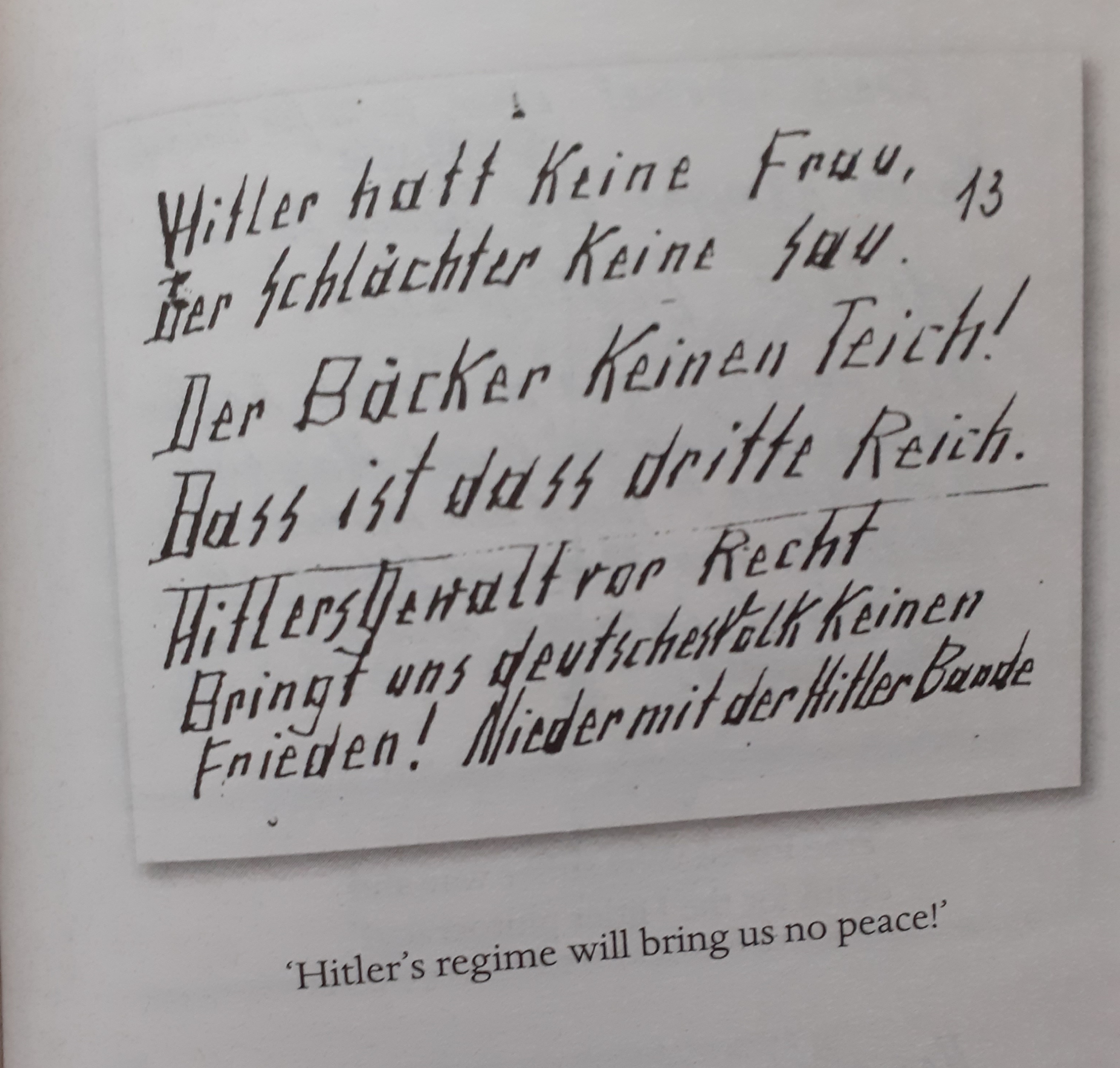
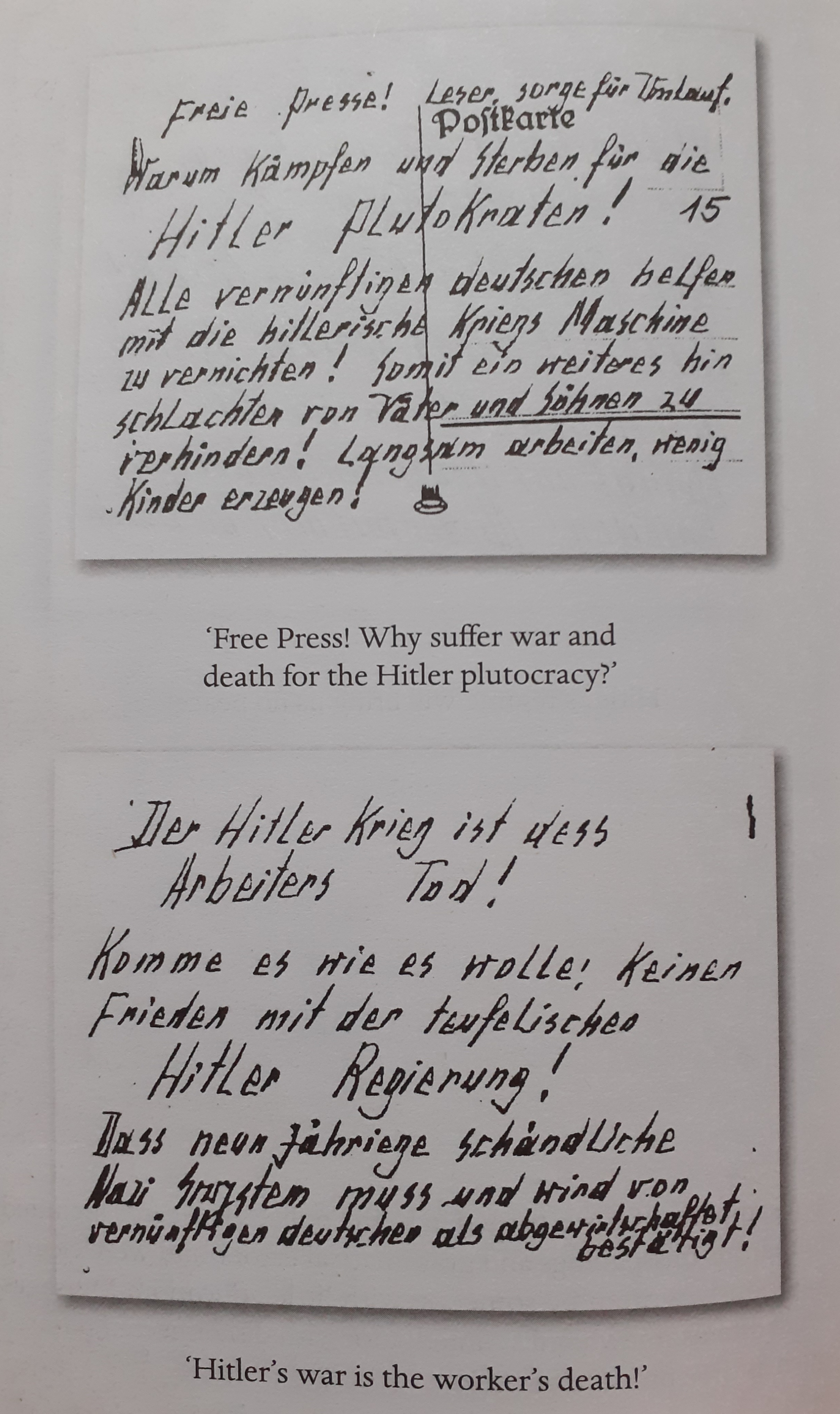
Otto Quangel is a quiet, unobtrusive man – the word โlaconicโ is used repeatedly โ living in Nazi-ruled Berlin during World War II. He and his wife Anna are content with their inconspicuous lives, careful not to do anything that might disturb the peace of their quiet, little flat on Jablonski Strasse. But when they receive news from the Front of their only sonโs death, the couple are spurred into action. Otto begins to write anonymous postcards criticising the regime, dropping them in public buildings around the city with Annaโs assistance. Soon, this illegal activity catches the attention of Gestapo Inspector Escherich – โA man so dry, you could easily take him for a creation of office dustโ. And a deadly game of cat and mouse begins …
The life of the Quangels is just one thread of the narrative, intricately interwoven with those of their neighbours, colleagues, Escherich himself and incidental characters caught up in the events. Hans Fallada tells these stories with shrewd, journalistic observation, presenting brilliantly clear insight of daily life in war-time Berlin. His descriptions, littered with humour of the most steadfastly deadpan variety, detail both the mundanities and little quirks of human nature, using a broad spectrum of characters to do so: from a pet shop owner to a Gestapo officer to a gambler. By providing this societal cross-section, the novel effectively demonstrates that no one dealt with the pressures of living under such a regime in exactly the same way. Judge Fromm chooses nocturnal isolation, just as Trudel retreats to her home comforts. Hetty copes through dissenting thoughts, but they remain just that, while one factory worker puts his treacherous sentiments into action, mangling his own hand in an act of sabotage. Naturally, their stark contrasts are interesting. However, arguably more compelling is the way Fallada uses this range of characters to show one consistent parallel; everyone, including those in positions of power, has something (or someone) to hide. For many, this is simply their unvarnished thoughts, as potentially dangerous as any crime – โthoughts were freeโ, they said โ but they ought to have known that in this State, not even thoughts were freeโ. This widespread concealment could explain the โturn a blind eyeโ behaviour of the public that pervades the novel; few people are willing to help others, due to the risk of drawing attention to themselves, thus exposing their own secrets.
Thoughts are a critical aspect of this novel. Although written in the third person, Falladaโs ability to write a convincing, rounded internal perspective is second to none. He uses tangential characters as onlookers to give wider context, generally remaining neutral and allowing the reader to draw their own conclusions. This complete description argues the point that no one character is wholly good or bad; each has thoughts that may betray their admirable ideals, or redeeming qualities that undermine their malicious acts. You understand their thought processes and subsequent actions, though you might not agree with them, because of the way they are written. However, the author does not hesitate to also hold his characters accountable or condemn them if necessary, reminding the reader throughout of his protagonists originally flawed beliefs.
โThings that when they first has happened had struck them as barely censurable, such as the suppression of all other political parties, or things that they has condemned merely as excessive in degree or too vigorously carried out, like the persecution of the Jews โฆโ
There are so many well-known novels set during this period of history (Goodnight Mr Tom, The Boy in the Striped Pyjamas, The Tattooist of Auschwitz to name a few) but the particular outlook of Alone in Berlin is one I had rarely considered. As Roger Cohen observes, ‘what Irรจne Nรฉmirovsky’s “Suite Franรงaise” did for wartime France after six decades in obscurity, Fallada does for wartime Berlin.’ Though the novel incorporates both overt resistance to the regime (Grigoleit) and fervent collaboration (the Persickes – albeit for their own egocentric ends), for the most part the narrative focuses on the middle ground. Its characters, whatever their hidden opinions, mostly live in fearful compliance, uncomfortably aware of the perpetrated atrocities (both witnessed and rumoured) but unwilling or unable to raise their heads above the parapet. Survival seems to be the day-to-day mode of existence throughout the book. Even those initially willing to straddle the line of legality to help, by forging medical notes or sheltering politically dubious individuals, swiftly retreat once the personal risk becomes too great.
This โsurvival instinctโ is the initial position of the Quangels; Otto is an exemplary survivalist, offering no opinions and avoiding loose talk by barely uttering a word. However, with the death of their son, the desire to fight becomes stronger. The coupleโs awareness of their actionsโ severe consequences is referred to several times, yet they continue with steely, measured determination. This being said, they are careful. Otto particularly understands the need for longevity in their muted resistance; the more postcards they can write, the further their message will spread. Unfortunately, the perspective of Escherich brings a strong sense of dramatic irony; the reader knows the cards are not having the effect the couple imagine. They appear to have overestimated the general population, or perhaps underestimated the potency of fear and, though not entirely alone in their beliefs, most of the cards are immediately handed to the Gestapo. If anything, the finders are angry to be endangered by the unknown writer – โdragging strangers to the gallows!โ. One of the poignant moments of the novel is Otto discovering this. Yet, as Richard Flanagan observes:
โ[This novel] suggests that resistance to evil is rarely straightforward, mostly futile, and generally doomed. Yet to the novel’s aching, unanswered question: ‘Does it matter?’ there is in this strange and compelling story to be found a reply in the affirmative. Primo Levi had it right: This is the great novel of German resistance.โ
Alone in Berlin offers a profound sense of time and place. The setting is immersive, the fear and tension is palpable, with every conversation a game of Russian Roulette. The fact that Hans Fallada (born Rudolf Ditzen) was a contemporary writer adds gravitas to this conveyed atmosphere of distrust and his personal context is an important factor. Falladaโs experience of the regime was convoluted โ he had been both incarcerated and institutionalised during the period, all the while struggling with a morphine addiction. Though many writers and intellectuals fled Germany for their own safety, he refused to do so, despite having been blacklisted by the Nazis. Overall, the bookโs portrayal of life in wartime Berlin is damning, sometimes directly so – โin the year 1940, he had no yet understood, our dear Harteisen, that any Nazi at any time was prepared to take away not only the pleasure but also the life of any differently minded Germanโ – but for the often more subtly. Yet, when given the Hampelโs Gestapo file by a friend, Fallada initially did not wish to write about it, arguing that he had not fought back and had even cooperated with the Party. Eventually, his interest in the psychological aspect of their story took over and he completed Alone in Berlin in just 24 days, dying a few weeks before it was published in 1947. It wouldnโt be translated and re-published in English until 2009, sparking a resurgence in popularity but it remains one of the very first anti-Nazi novels to be published in Germany after the Second World War.
A lengthy but worthwhile 4 star read for me. Now on to something a little bit lighter!
โญโญโญโญ
Rating: 4 out of 5.
** NERDY SIDE NOTE: One interesting aspect for me (admittedly probably not for anyone else…) was considering this density as a side-effect of translation. The occasionally long, slightly clunky sentences might hypothetically be due to the novel being originally written in German? Every now and then the phrasing is slightly unnatural in English; I know from learning German that sentences can be quite complex, with phrases layered on top of each other. Or it might be that the translation is entirely true to the original text and that is just Fallada’s writing style? Just a thought I had. I find translation fascinating; the little nuances can change the feel of every sentence, which is also what makes it so difficult! Wishing I read German well enough to answer my own question, but that day is far away!
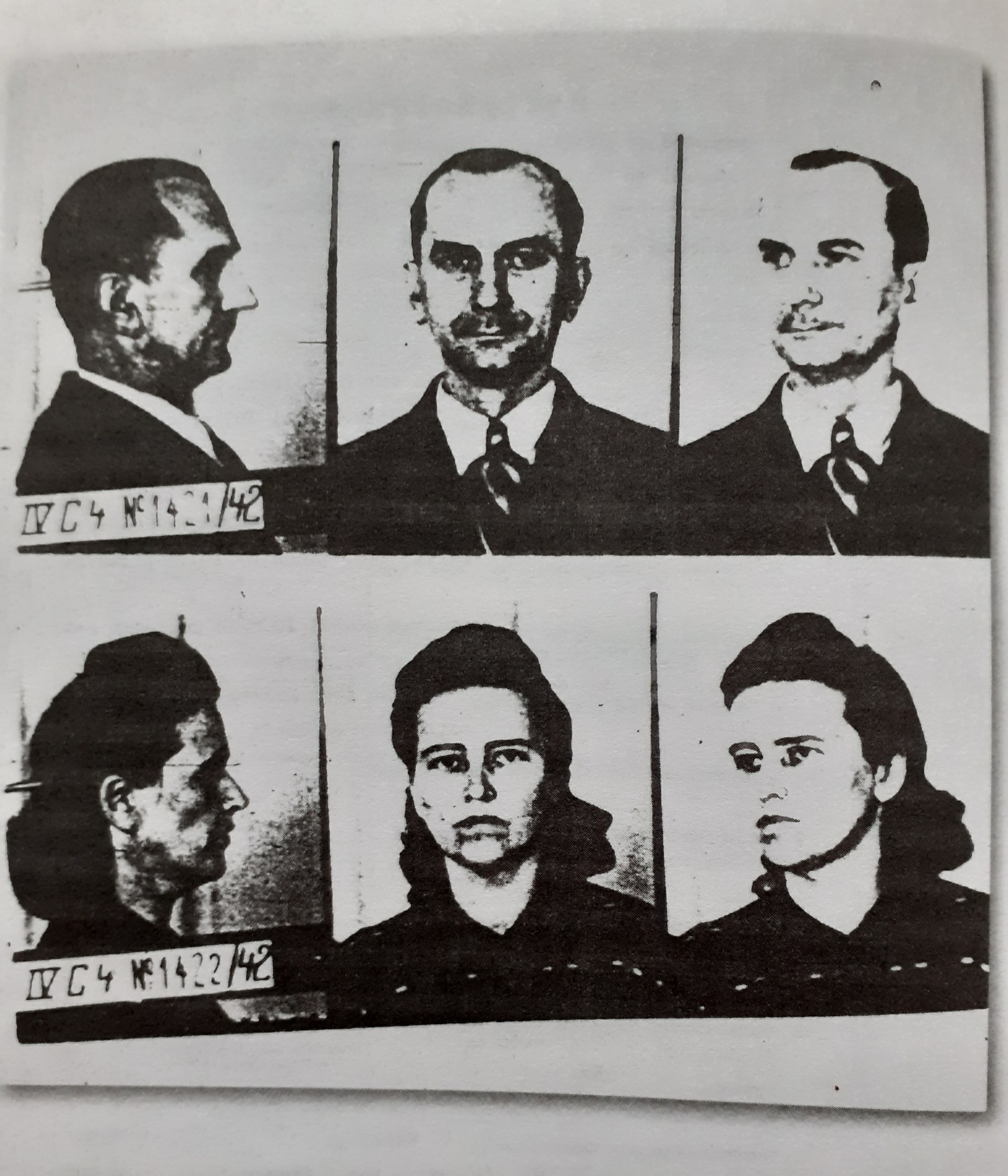
Photos from the Hampel’s Gestapo file, including images of the original postcards.
โWe each had one eye on the clock. Hers was to remind herself of how much longer she had left as the centre of my universe. Mine was to decide on the right time to leave herโ.
Not a typical read for me โ I donโt gravitate towards mysteries or thrillers, but this was a book club recommendation and itโs always good to try something different โ I need to leave my historical fiction comfort zone now and again! In terms of genre, it straddles several categories in my opinon – family drama, mystery, thriller and crime at times. I’m afraid my review is not entirely spoiler-free; so much happens in this book that it would be difficult to give any sense of the story without a few hints …
Blurb:
โAll she wanted was the truth, but sheโll wish she never found out.
When Catherine wakes up alone one morning, she thinks her husband has gone for a run before work. But Simon never makes it to the office. His running shoes are by the front door. Nothing is missingโexcept him. Catherine knows Simon must be in trouble. He wouldnโt just leave her. He wouldnโt leave the children. But Simon knows the truthโabout why he left and what heโs done. He knows things about his marriage that it would kill Catherine to find out. The memories she holds onto are lies. While Catherine faces a dark new reality at home, Simonโs halfway around the world, alive and thriving. Heโs doing whatever it takes to stay one step ahead of the truth.
But he canโt hide forever, and when he reappears twenty-five years later, Catherine will finally learn who he is.
And wish sheโd stayed in the dark.โ
What I liked:
The first few chapters quickly draw you in to the story and the lives of Catherine and Simon. The rapid chronology jumps are a little disconcerting at first, but once you have a better understanding of the key players, it’s easier to follow, and works as a tool to increase narrative pace.
I particularly liked the technique of mirroring of Catherine and Lucianaโs lives, with their illnesses and the empathy this brings to Simon and Catherineโs encounter in the present day of the novel. I think this is a really effective and interesting section โ probably the one I appreciated the most.
I genuinely wanted to know what happened next – Simonโs reason for leaving is alluded to from the start, built-up as horrific and life-changing but without giving too much away – a marker of genre, I guess. Due to stalling pace in the middle, this nearly became a DNF, but the main thread of the โthe terrible thingโ kept me reading to the end to find out.
What I liked less:
Despite a promising start, the pace throughout the mid-section of the book really dragged and the plot became fragmented, each part seeming slightly disconnected from the last. I think this was largely due to the flitting backwards and forwards between several versions of the past and present. Although this was initially a useful approach for increasing pace, by the middle it was interrupted the flow of the narrative
Personally, I struggled to connect with either main character (Simon more so, though I guess thatโs a slight relief due to his psychopathic tendencies โฆ). By the end, I disliked them both; they felt synthetic in some way, which, on the face of it, is a completely ridiculous statement given that they are both fictional characters but thatโs the word I associated with them.
Although in theory a โrealisticโ novel, there were several events which bordered on fantasy. Large portions of the plot seemed overly contrived โ there were too many improbable events and coincidences, from the chance online communication between James and Luca to Simonโs encounters with Paula and then Darrenโs brother on the other side of the world. The Italian section with Simon and Luciana had the feeling of a Hollywood style rags-to-riches story, idealistic and overly perfect, which didnโt fit tonally with the beginning or end of the book. One or two of these elements might have passed me by, but so many far-fetched occurrences pulled me out of the narrative; I was too busy being cynical to get lost in the story.
Iโm always hesitant to criticise a book someone has spent so much time planning and writing, but this didnโt strike a chord with me. That being said, others in my book club raved about it, as with everything – as with every book, it’s clearly a matter of personal taste.
‘I got you the boots because everybody deserves to have something good in their life at least once’
‘Once’ by Morris Gleitzman
Currently reading this book with my class as part of our World War 2 topic. It reminds me a lot of John Boyne’s ‘The Boy in the Striped Pyjamas’ but in this case from the perspective of a Jewish boy called Felix in Poland. An interesting read yet, in class discussions, I’m aware that the inference is fairly subtle with regard to the contextual events engulfing Felix’s life – more so than I had first thought. As such, my interpretation of the book was very different to that of the students, sort of reiterating the author’s point!? The sparks of humour are also nuanced; there were more than a few parts that made me chuckle. But then just as many that had me misty-eyed or teary intermittently throughout …
‘Even the nuns don’t get whole carrots, and they get bigger servings than us kids because they need extra energy for being holy’
‘ “Yes but where?”, says a woman wearing a scarf. A man with his arm round her rolls his eyes. He looks like he’s done it before, so he’s probably her husband’
‘Thank you God, Jesus, Mary, the Pope and Richmal Crompton!’
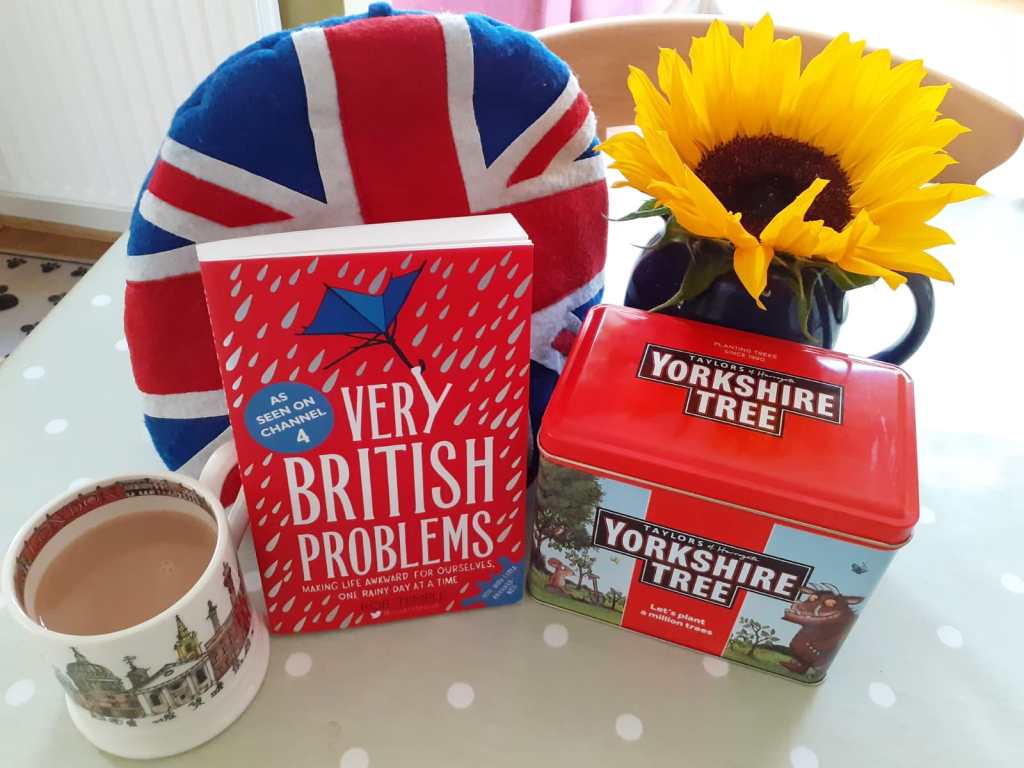
I’ve just finished Very British Problems by Rob Temple. I was looking for a lighthearted, humorous read and this was just the ticket! Obviously it’s quite a specific book – the title itself sets out the target audience – so it may not be for everyone, but it was exactly my cup of tea …
My Favourite ‘Very British Problems’
Looking into having your hands surgically removed after waving at someone who was waving at someone behind you.
Sneaking a few empties into your regular bin bag so the recycling collectors won’t think you have a alcohol problem.
Having a sky that thinks it fun to mimic the colour of the pavement.
Switching from ‘kind regards’ to ‘regards’ as a warning that you’re dangerously close to losing your temper.
Deciding which loyalty card to sacrifice to de-ice the windscreen.
Being prepared to argue to the death, at any given moment, over the correct method of making tea.
Let me know if there are any others you would add!
โConnell wished he knew how other people conducted their private lives, so that he could copy from example โฆโ (p.49)
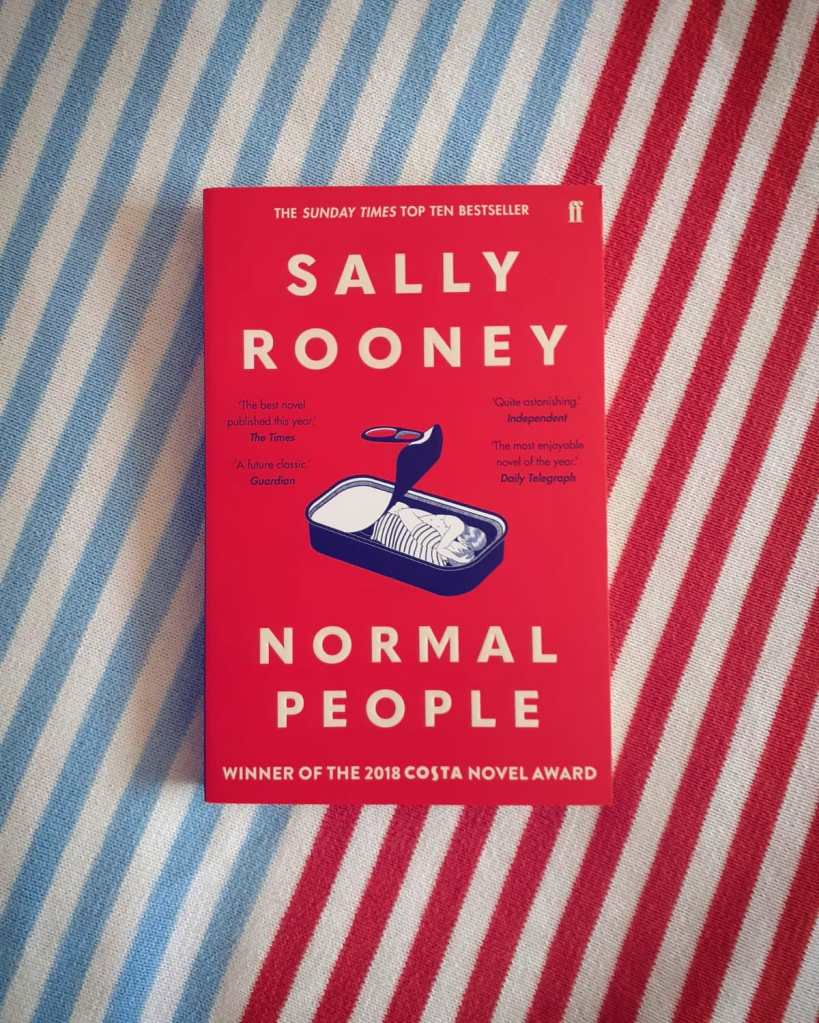
I have very mixed feelings about this book. Everyone raved about it when it was first published but itโs been sat on my shelf for a while, gathering dust. I finally picked it up because the series was about to be released โฆ though now I wish Iโd read it before even seeing the trailer โ maybe Iโd have imagined the characters differently. Overall, I liked the novel but found it dragged a bit; although I did want to know what happened next, I wasnโt desperate to find out, and it took me the best part of a month to finish, but this might say more about my attention span than the novel! Perhaps if Iโd had read it over just a few days, this would not have been the case?
What I didn’t like:
At times I foundaspects of the main characters and their story-line frustrating, both in terms of their individual behaviour and โback and forthโ nature of their relationship. My attitude towards the two of them changed constantly throughout the novel. Connellโs treatment of Marianne at school was irritating, and he fully deserved the tongue-lashing he got from Lorraine. But, however unfortunately, it is fairly realistic. You could argue that part of what makes this section so uncomfortable is that readers remember their own experiences of secondary school, โimbued with such drama and significanceโ (p.77) at the time. The hyper-awareness of othersโ opinions and changes in behaviour accordingly, maybe in a way theyโd now be ashamed of. Whatever the reason, the early tone of the novel touches a nerve.
As such, there is something very universal in Connellโs realisation that no one cared as much as he had thought:
โThis was the most horrifying thing Eric could have said to him, not because it ended his life, but because it didnโt. He knew then that the secret for which he had sacrificed his own happiness and the happiness of another person had been trivial all alongโ (p.77)
Marianneโs ambivalence to other peopleโs opinions is arguably a trait to be admired. However, this initial display of fierce independence makes it all the more frustrating and upsetting that she allows Jamie, then Lukas to treat her so badly; Connell voices (or rather internally monologues) a similar opinion.
The chronology also took me a while to get my head around; the first few chapters are a little jolting but then you get used to the structure โ it reminded me of โOne Dayโ, skipping to certain points of their relationship, and then filling in the gaps retrospectively.
The speech formatting โ I know this is an artistic choice and a silly thing to complain about but at times it was hard to tell what was speech and when weโd moved back to internal dialogue.
Peggyโ a terrible friend and person โฆ
What I liked:
I was frustrated by Marianne and Connell at times but writing this review, Iโm reminding myself that good writing isnโt creating completely likeable characters โ that would be unrealistic, not to mention boring! Generating any emotional reaction, positive or negative, to words on a piece of paper means the author has achieved something.
I empathised with both of them at different points, especially with Connellโs anxieties about university and the opinions of other. They are both flawed, but you can see over the course of the book how they make each other better people. For me, the โnormalโ presentation of their relationship worked well โ it wasnโt sensationalised/overly-romanticised but was still intimate and affecting.
Sally Rooney writes three-dimensional characters very well, in the sense that she shows all sides of them โ not just the good and the bad, but the mundane moments, their silliness and humanity. What I particularly enjoyed was her talent for making you like the character but understand why otherโs might not … I can easily imagine that if I were to bump into Marianne at a party, I might well share Helenโs opinion, finding her self-absorbed and irritating. But with context and the insight of how Connell views her, she is presented differently. Equally, though you have the internal dialogue from Connell that explains his decisions/rationalises his decisions from his perspective, itโs easy to see how these actions are confusing to other people and have the potential to hurt those around him, however unintentionally.
Also, I like learning new things and I now know what a โpressโ is in Ireland โฆ
“Full marks to the anaesthetist wearing a badge that says: ‘He sees you when you’re sleeping, he knows when you’re awake’.”
A very un-Christmassy photo
Essentially, see my previous review of ‘This Is Going To Hurt’ (โญโญโญโญโญ) but just add in some mistletoe and bauble-based injuries!
I know it’s a cop out, not writing another separate review, but I couldn’t think of anything vastly different to say … The book is unmistakably Adam Kay – gallows humour and blistering honesty – so, like the first one, it is very VERY good!