Review: Satisfaction by Nina Bouraoui

‘Memory is cruel, we call on it to rekindle burnt out fires, but with the years, it fades, leading us down phantom paths, like beggars searching for traces of our past, towards houses that never existed. Memory is their punishment, mine lay in my beginning. Violence endures, its medusa-like tentacles live on. I have become a second-generation coloniser. I shall not be loved here.’  
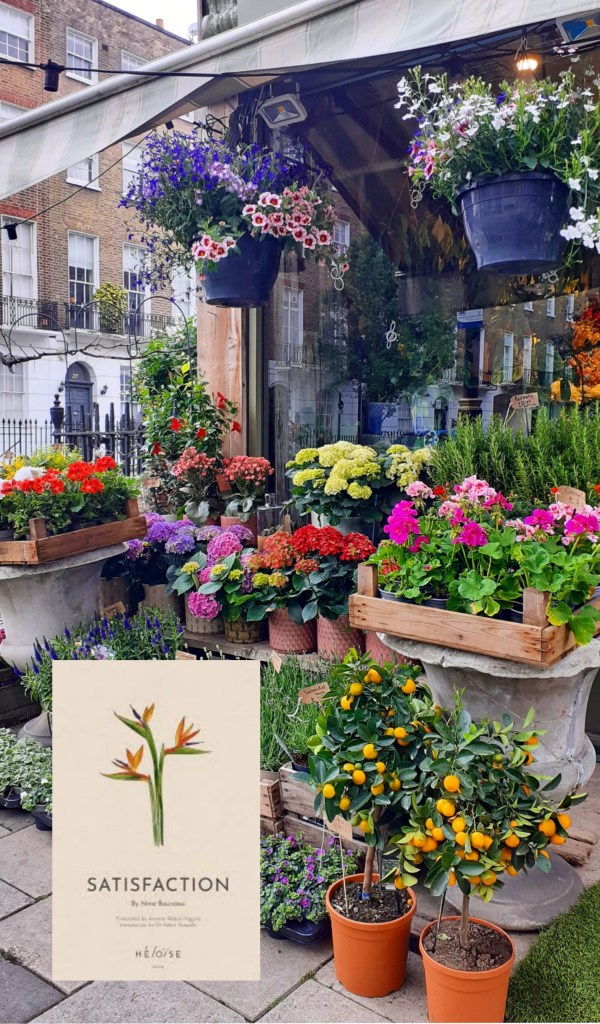
Satisfaction is a complex cocktail of jealousy, desire and self-loathing, set against the backdrop of a nation in recovery, where the scars of violence run deep. In her ‘notebooks of shame’, Michèle Akli, a Frenchwoman living in Algiers with her husband Brahim and their son Erwan, lays bare intense feelings of yearning and envy, rooted in a crippling fear of losing her child’s affections. Though undoubtedly aware of her own paranoias and prejudices, even denouncing herself as a ‘leech mother’, she is unwilling, or perhaps unable, to disentangle her sense of self from the boy. 

This emotional turmoil reaches a pinnacle with the introduction of Erwan’s friend Bruce, and her mother, Catherine, who subsequently becomes the obsessive focus of all Madame Akli’s repressed frustrations and desires. A considerable part of the two women’s association is fabricated, built from imagined scenarios and conversations that the protagonist plays out in her mind; this parallel experience remains unvalidated by the subject of her fantasies, thus, these repeated thoughts become a form of masochism. It is unclear how much of the infatuation is specific to the character of Catherine, or whether it could have attached itself to any individual who appeared at this moment in time, a diversion for the inner turbulence she was experiencing. 

Michèle’s relationship with Bruce is even more convoluted; her open contempt towards her son’s friend is uncomfortable at best, and ruinous at worst. Their interactions reveal the narrator’s nihilistic attitude towards women, laced with what she herself identifies as ‘latent misogyny’. She surmises that Bruce has taken the name of her idol, Bruce Lee, in ‘a bid to alter her fate’ and that ‘male violence has drawn out her femininity’. There is an indirect connection here to an earlier comment on clothing, as the notebook’s author admits to consciously choosing loose-fitting garments -’long skirts don’t arouse any desire’ – as a protective measure against the attention of men in the city and the danger this represents. Femininity is stifled by an instinct of self-preservation. Considering this, could it be suggested that an element of this misogyny is born of fear and vulnerability, and resentment of these sentiments? 

There is a duality to Madame Akli’s gendered hostility; it’s tied up in both the threat of violence from men and of competition from other women, for the attention of the male figures in her life.  

‘I never wanted a second child, I didn’t want to risk having a girl, I wouldn’t have known how to bring her up, I’d have been jealous of her relationship with Brahim, with Erwan. I’m the only woman in my household, the mirror image of Catherine. Women don’t like other women.’ 

This final statement reiterates a darker undertone in the exchanges between Michèle and Catherine – though outwardly admiring of this new female presence, she is also envious. Simultaneously, it sheds light on the conflicts at the core of the former’s relationship with Bruce. On the one hand, there is concern that Bruce’s distortion of traditional gender boundaries will influence Erwan; his mother doesn’t want to think of him ‘playing the girl’, thereby making him as fragile as she perceives the position of women in Algiers to be. On the other hand, any friendship between her son and Bruce is a risk to the maternal bond and it seemed, at least to me, that this was far greater fuel for her animosity than Bruce’s androgynous presentation.  

Laden with visceral sensuality and evocative description, Satisfaction is a chronicle of envy, longing and pain, and an important contribution to the growing catalogue of translated fiction in the UK. As Professor Helen Vassallo writes in the introduction to the novel: 

‘[The fact] that Bouraoui’s work sits so well with such a range of titles (commissioned in translation by a variety of publishing houses) is a testament to both its literary merit and its universal appeal. It also highlights the importance of making space for women’s writing – particularly texts from other cultures that focus on marginalised experiences – in the Anglophone literary market, an endeavour that characterises the work of Héloïse Press’  

Satisfaction by Nina Bouraoui (translated by Aneesa Abbas Higgins), Héloïse Press, November 2022
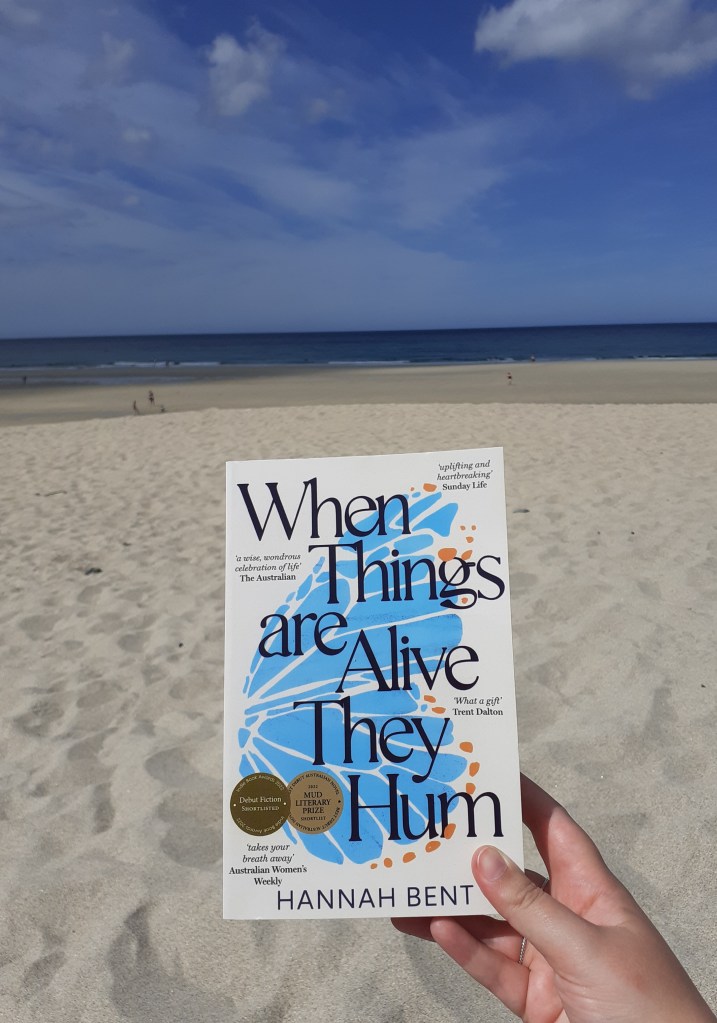
Review: When Things Are Alive They Hum by Hannah Bent

‘When things are alive, they hum. You can hear it if you put your ear to the chest of an animal or if you lean close close close to a plant. My own hum goes dum dum da da dum da dum. This is the sound of my heart talking to me …’  

Sisters Marlowe and Harper share an intangible connection, deepened by the loss of their mother and strengthened by the challenges they have faced together. For years, it has been the two of them against the world, each fiercely protective of the other.  

When Marlowe, now living in London to complete her PhD, is urgently called back to the family home in Hong Kong, the life she has carefully cultivated begins to unravel. Harper, born with what she refers to as the Up syndrome, also lives with a congenital heart condition that has kept her in and out of hospital since she was baby. Her health has deteriorated rapidly, yet, due to her disability, she is deemed not to be a viable candidate for the heart and lung transplant she needs to survive.  

Faced with the possibility of losing yet another person dear to her, desperation tests Marlowe’s limits, stretching the lengths she will go to in order to keep Harper alive, and her ability to separate her own pain from her sister’s wishes.  

When Things Are Alive They Hum is an exploration of grief, joy, love and loss, raising important questions about cultural perceptions of Down’s syndrome, and attitides towards disability in general, both in Hong Kong and across the world.  

While this novel prompted me to consider social issues I never previously had, and I enjoyed the sisters’ relationship, areas of the plot felt disjointed and there was an abrupt stalling of pace in the Shanghai section. Ideally, I would have liked to see further character development for James and Irene, and the butterfly thread running throughout did not always complement the story, giving the impression of having been tacked on.  

Nevertheless, I would recommend this for any fans of My Sister’s Keeper or Me Before You – though please save for a day when you’re feeling emotionally robust!  

When Things Are Alive They Hum by Hannah Bent, Ultimo Press, 2022

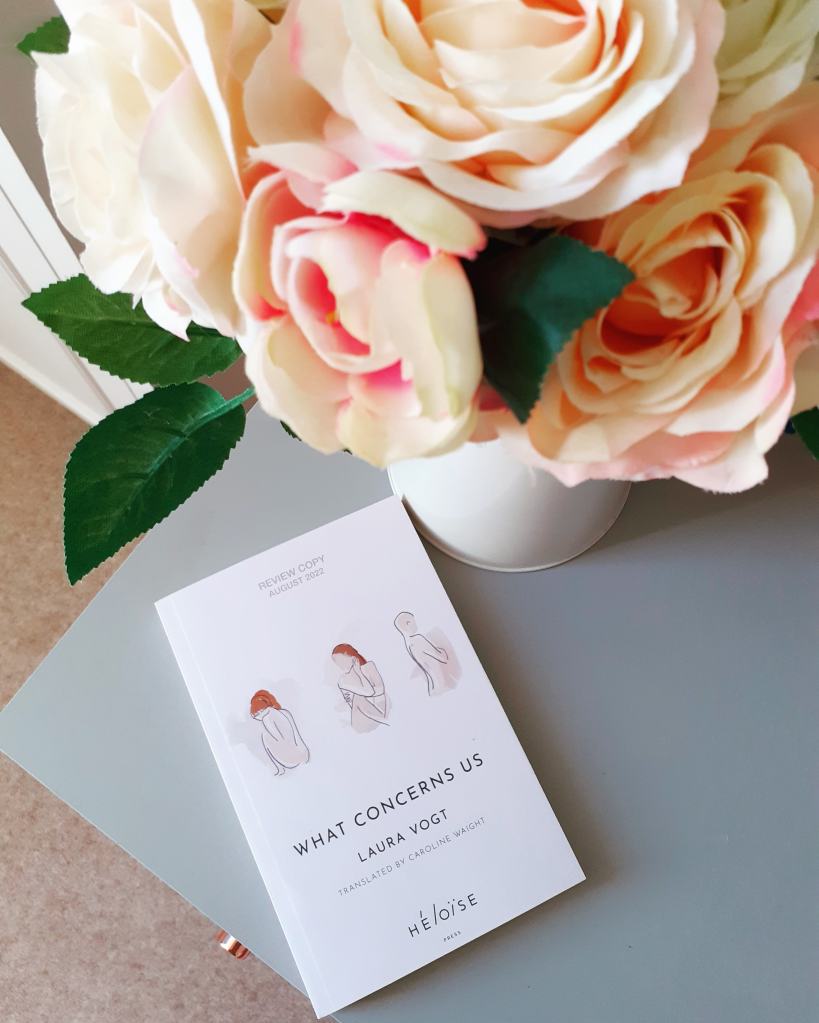
Review: What Concerns Us by Laura Vogt

She was missing something, she realised with painful awareness. But what? At some point Boris would leave, she thought. It would be easy for him, without the burden of motherhood …‘  

Through the lens of three interwoven lives, What Concerns Us (Was uns betrifft) explores themes of abandonment, dissociation and desperation. Vogt examines the complexities of motherhood, shedding harsh light on how its mental and physical tolls can extend far beyond birth.  

Having found stability in a traditional family model for her first pregnancy, albeit achieved in an unorthodox manner, the birth of a second child disturbs Rahel’s hard-won peace. The struggle to connect to her new-born daughter, Leni, unsettles the household she has carefully crafted to be entirely unlike her own childhood. These difficulties prompt Rahel to reflect on a strained relationship with her own mother, Verena, detached and selfish following the departure of Erik, father to Rahel and her younger, free-spirited sister Fenna. 

‘You know her. She’s a house of a hundred rooms. 

Hundred and fifty, at least, said Rahel’ 

Across several overlapping timelines, the elder daughter grapples with intense feelings of resentment and anger towards her remaining parent, and inherent differences with her sibling. Charged interactions between the three are a continous reminder of familial trauma – shared but interpreted quite differently – that has echoed through decades, shaping the sisters’ lives, relationships and their own ideas of parenthood.  

Gender politics play their part; growing up in an all-female household has resulted in a suspicion of men. Having been abandoned by both Erik and Martin, her first child’s biological father, Rahel expects the same behaviour from her partner, Boris, and is deeply mistrustful when he doesn’t fit the pattern she recognises. The two sisters are confronted with their own expectations of femininity; questioning the consent of an interaction with her partner Luc, Fenna concludes violence is in his nature and it is her role to be submissive. Meanwhile, Rahel’s believes she is not meeting the standards for a mother and wife. Showing clear (at least to the reader) signs of postnatal depression, she assumes Boris blames her for this and resorts to self-destructive behaviours, as if trying to prove her own fears.  

What Concerns Us is Laura Vogt’s second novel and the first to be available in English. Translated by Caroline Waight, it will be published by Héloïse Press, an independent publisher specialising in contemporary female writing, with a focus on ‘intimate, visceral and powerful narratives’. Established in 2021 by Aina Martí, their beautiful covers are instantly recognisable and they offer a subscription model, similar to that of Peirene Press, for readers to enjoy. Upcoming titles include The Memory of the Air by Caroline Lamarche (September) and Satisfaction by Nina Bouraoui (November).   

Indie Insider Issue 24 – Women in Translation – is out now! Also featuring Comma Press, And Other Stories, 3TimesRebel Press and Tilted Axis Press 📚

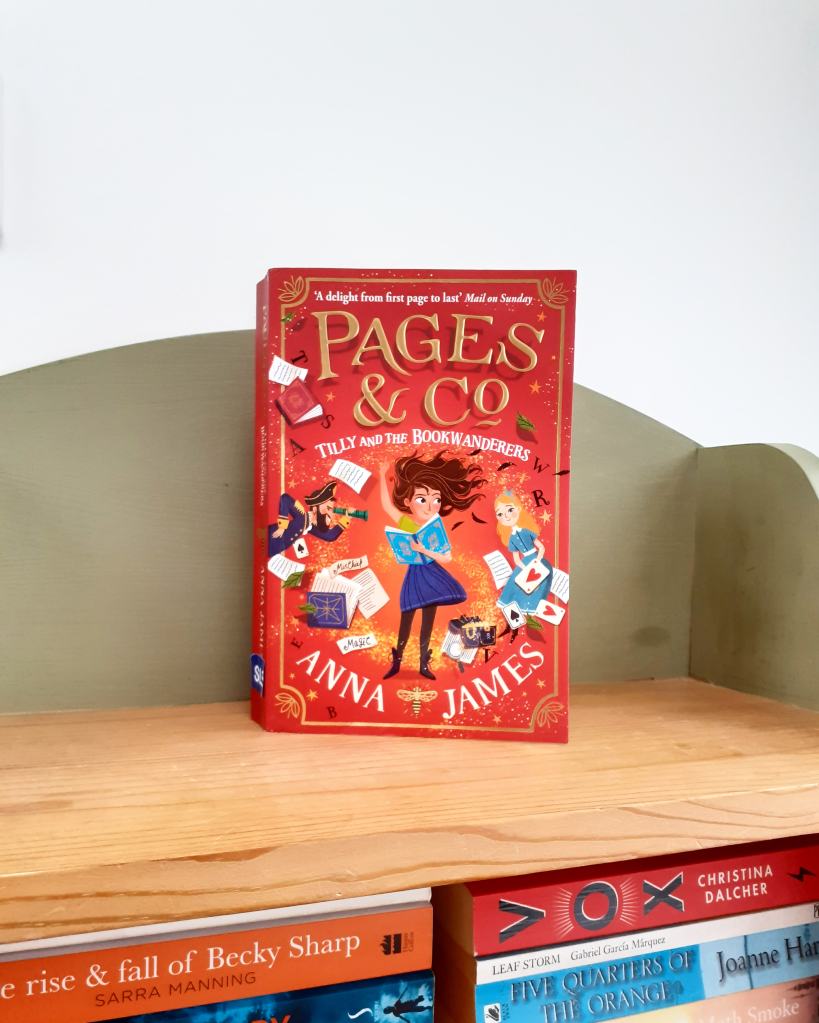
Review: Pages & Co – Tilly and the Bookwanderers by Anna James

A slight departure from my last few reads but a welcome change! 

Following the bibliophilic adventures of Tilly Pages and her friend Oskar, this is the first book in what is now a series of five, with the fifth part, The Treehouse Library, publishing today in the UK! 

Anna James opens the door to Pages & Co, run by Tilly’s grandparents Elsie and Archie, and surely the shop of any bookworm’s dreams!? 

The shop was made up of five floors of corners and cubbyholes, sofas and squashy armchairs, and a labyrinth of bookshelves heading off in different directions. A spiral staircase danced up one wall, and painted wooden ladders stretched up into difficult-to-reach corners. Tall arched windows made it feel a little like a church when the light spilled in and dust motes danced in the air. When it was good weather the sun pooled on the floor and the bookshop cat – named Alice for her curious nature – could often be found dozing in the warmest spots. During the summer the big fireplace behind the till was filled to bursting with fresh flowers, but as it was October a fire was roaring there.’ 

But when Tilly encounters two strangely familiar new friends, first Anne, “with an e” and then the inquisitive Alice, her family’s illustrious bookwandering history is revealed, setting in motion a chain of events that will change her life forever! 

Together with Oskar, she visits the Bookwanderer headquarters, the British Underlibrary, where they meet the (perfectly named) chief Librarian, Amelia Whisper, and discover the full extent of their newfound talents; not only are the pair able to interact with their favourite characters, but they can travel into the pages of the books themselves! There are, of course, rules, sternly enforced by another employee of the library, Enoch Chalk, the antithesis of the friendly Amelia, and of whose ulterior motives the children are immediately suspicious.  

Delving further into the uncharted territory of bookwandering, the friends’ adventures bring them closer to answers Tilly has longed for since her mother’s mysterious disappearance. But once revealed, the truth is beyond anything she could ever have expected, or even believed …  

I didn’t really pick up this title so much as it was thrust into my hands by an excited group of Year 6s, raving about the series at our class book club.  

It’s undoubtedly a series written with book lovers in mind, the children who read under the covers with a torch well past bedtime. There are parallels with the Inkheart trilogy, one of my own childhood favourites, though not so much as to overpower this story – it certainly stands up on its own. It’s also aimed slightly younger, middle grade if I were to give it a category, whereas Inkheart is darker and more complex. In any case, I’d like to think Tilly Pages and Meggie Folchart would be friends. 

This reminded me of what I love about children’s books and YA; the willing suspension of disbelief required is refreshing. Following an afternoon immersed in Pages & Co, it may seem perfectly plausible that you would happen upon Lizzie Bennett one rainy afternoon in London. Admittedly, I wasn’t entirely convinced by the Captain Crewe plotline but hopefully this will be developed in Tilly and the Lost Fairytales.  

I was gifted the next two books at the end of the school year, so looking forward to seeing what Tilly does next!  

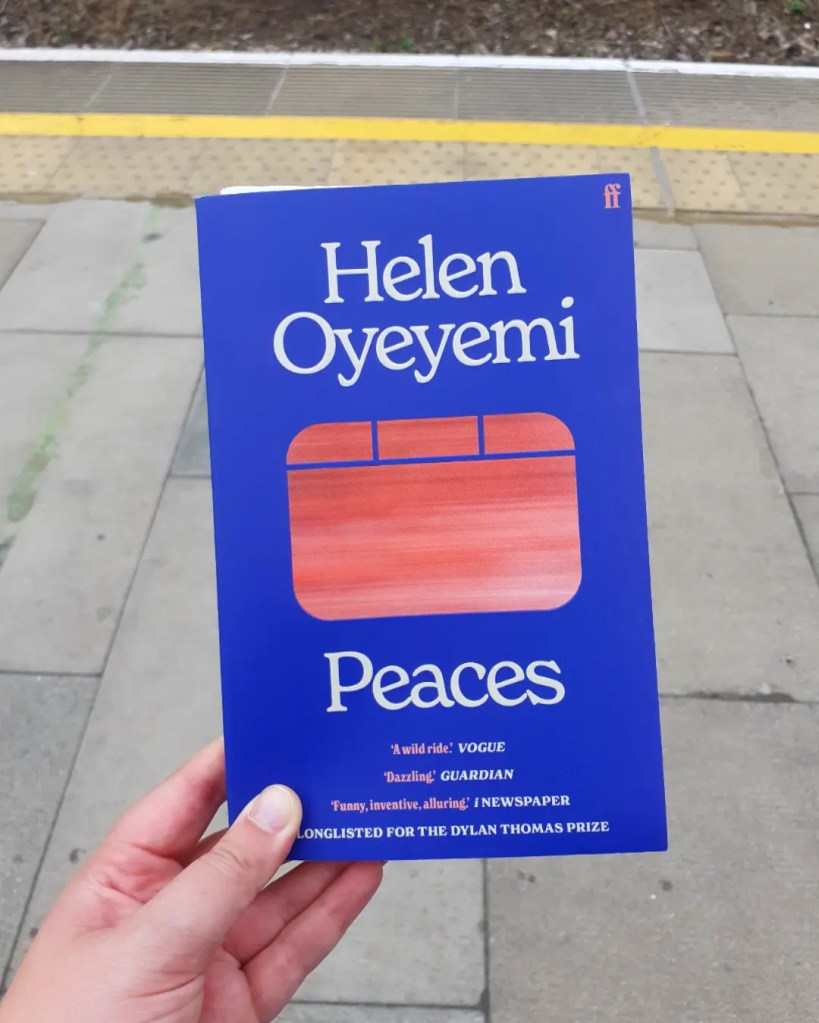
Review: Peaces by Helen Oyeyemi

‘We both know nothing’s all right, but when I tell you it will be, you take it. If you don’t, it’s because you’re holding out for another outcome altogether.’ 

Peaces is the latest addition to Helen Oyeyemi’s repertoire of electric, genre-subverting fiction. Stepping from a sleepy village station platform onto an eccentric train for their non-honeymoon, Otto and Xavier Shin embark upon a journey they could never have predicted, even in their wildest fever dreams. Oyeyemi takes mischievous delight in pulling her readers along as passengers; together with the couple and their travelling companion Árpád XXX (a mongoose with illustrious ancestry), they navigate a disorienting series of events, with the feeling of hurtling towards a foregone conclusion without the faintest idea what it will be.  

The train in question, The Lucky Day, is anthropomorphised to the degree of almost becoming a character itself and serves as an ‘incubator for intense experiences.’ Its miscellaneous carriages house a postal office, portrait gallery, glass greenhouse and, upon exploration, the pair encounter three other travellers: Allegra and Laura, both railway staff of sorts, and the reclusive Ava Kapoor, permanent locomotive resident and theremin prodigy. Following a number of startling coincidences, Xavier and Otto begin to realise that the trip is not all it seems; as long-forgotten memories surface and mysterious figures from their pasts materialise, they endeavour to uncover truths beyond the smoke and mirrors.  

Oyeyemi rejects the label of magical realism in favour of extra-fictional, asking or rather compelling, her reader to temporarily suspend their disbelief. Sardonic wit and satire cut through fanciful notions at refreshingly regular intervals – ‘not even Coke … Pepsi. The preferred beverage of souls damaged beyond repair’ – and the author’s unique descriptive technique is captivating – ‘the colour of Darjeeling tea in the fourth minute of brewing’. I was simultaneously reminded of Murder on the Orient Express, Wes Anderson’s handiwork and Lemony Snicket’s A Series of Unfortunate Events (less obvious perhaps but the gothic tint and niche character interests are all there!). A serious undertone also permeates the pages; Oyeyemi’s unyielding scrutiny of the human condition is punctuated by echoes of imperialism, as the engine’s bygone days of tea-smuggling are uncovered – ‘I’m sure almost no one deludes themselves that all their ancestors were decent. Pick a vein, any vein: mud mixed with lightning flows through, an unruly fusion of bad blood and good.’ 

A thousand other stories conceal themselves behind that of Otto, Xavier and Árpád, from the emerald-swallowing habits of the Kapoor forebears to the Parisian guardians with outlandish ties to international crime syndicates. This novel has iceberg tendencies, hiding 90% beneath the surface as each sentence begs more questions than it answers, stirring up a mesmerising cocktail of whimsy, suspicion and intrigue. 

***********

Issue 23 of The Indie Insider – Travel, Journeys, Migrations – is out now!

Follow us on Twitter and Instagram to keep up to date with all things indie publishing 🧡

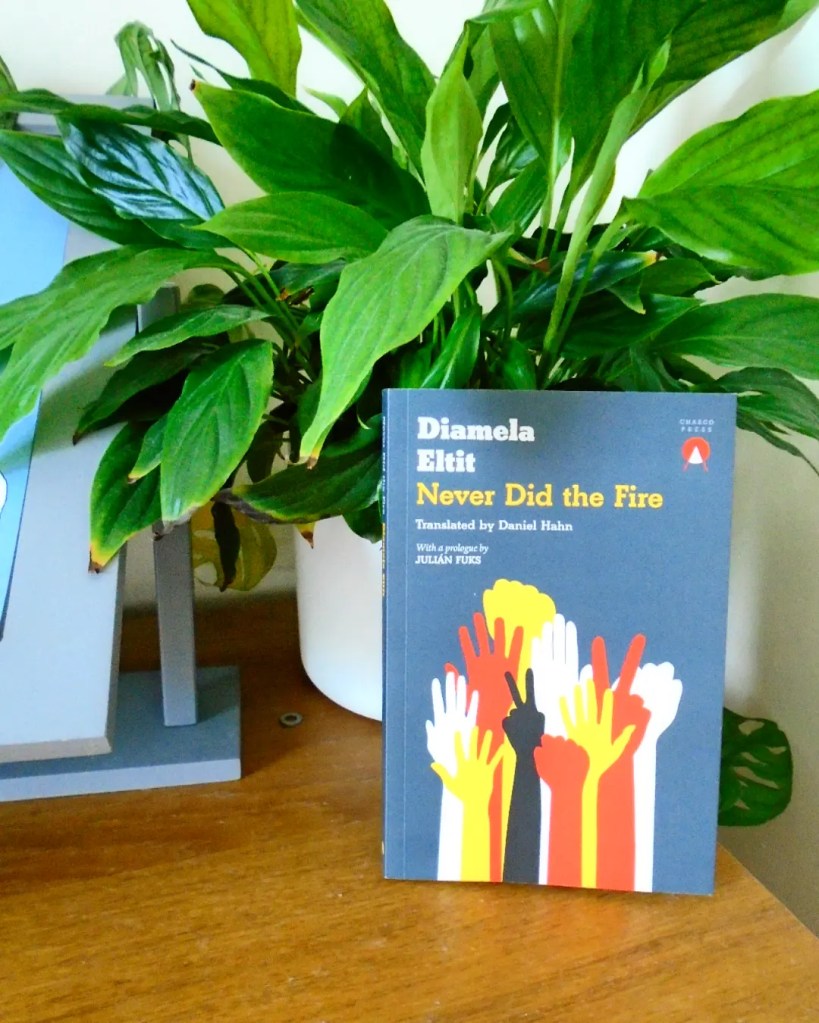
Review: Never Did the Fire by Diamela Eltit

‘We cannot, you said to me, lapse into the sentimentality that the most predictable side of our age has in store for us …’ 

This was a worthwhile, but incredibly challenging read. Centred around two unnamed characters, both plagued by frailty, guilt and grief, the novel examines disillusionment in the aftermath of political fervour. The couple grapple with their past, adrift without the familiar guidepost of revolutionary action and each resentful of the other; they appear no longer joined by love, but rather by a warped form of loyalty, irrevocably tethered by shared history. Much of the novel takes place in their bed, which serves alternately as a battleground accentuating the gulf that has grown between them, and a cramped, suffocating refuge from the world outside.  

Betrayed by their aging bodies, they mourn the loss of their child, cause and ideologies, clutching at increasingly tenuous identities. The dual political and biological meaning of the word ‘cells’ is conflated throughout, suggesting these ideologies form the very essence of who they are – or were. A prevalent sense of unravelling is intensified by the stream of conciousness narration; the woman’s thought process is jumbled, as nebulous memories surface and she questions the reliability of her recollection. Similarly, the story’s chronology is a complex jigsaw of timelines, moving almost indistinguishably between past and present and, towards the end, even offering alternative realities. I’m still unsure as to how all the pieces fit together. One interpretation could be that Eltit has left this deliberately unresolved, thus mirroring events in Chile’s recent history and the absence of justice for innumerable crimes perpetrated by Pinochet’s regime or closure for the families of victims. 

Never Did the Fire is bleak, ambiguous and infuriating. A haunting narrative that I cannot claim to understand in its entirety, but nevertheless one that will stay with me.  

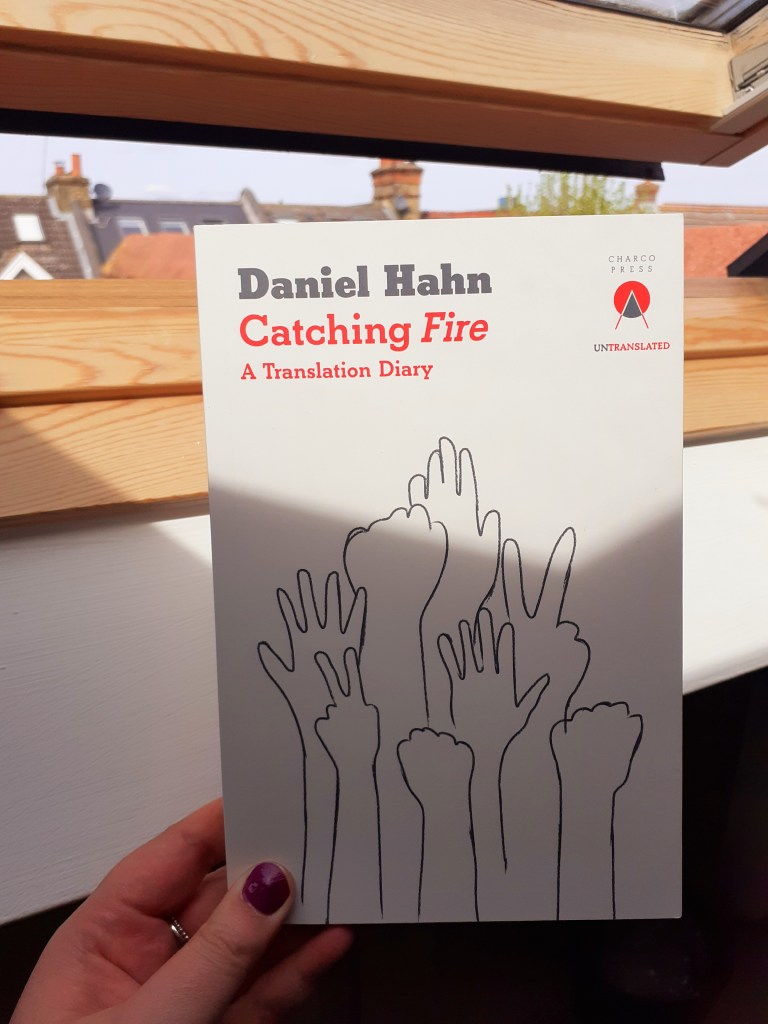
I would highly recommend reading this book in conjunction with Daniel Hahn’s translation diary, Catching Fire. Whether or not you have a specific interest in translation or Spanish-language literature, the diary is an accessible read that provides fascinating insight into the novel. He addresses both challenges particular to Spanish, such as syntax, gendered words and homonyms, and also universal translation issues. It must have been a mammoth task to translate a text this enigmatic, but Hahn’s witty, self-deprecating style is an effective contrast to the intensity of Eltit’s narrative.  

Catching Fire began as an online translation diary (extracts of which are still available on the Charco Press website) but has now been published as the first in Charco’s new series – Untranslated – in which English-speaking authors will share their experiences and appreciation of Latin American culture. Keep an eye out for the next title, Homesick by Jennifer Croft, publishing in May!  

Reviewed for The Indie Insider – https://tinyletter.com/theindieinsider/letters/issue-20-renewal-and-regrowth 💜

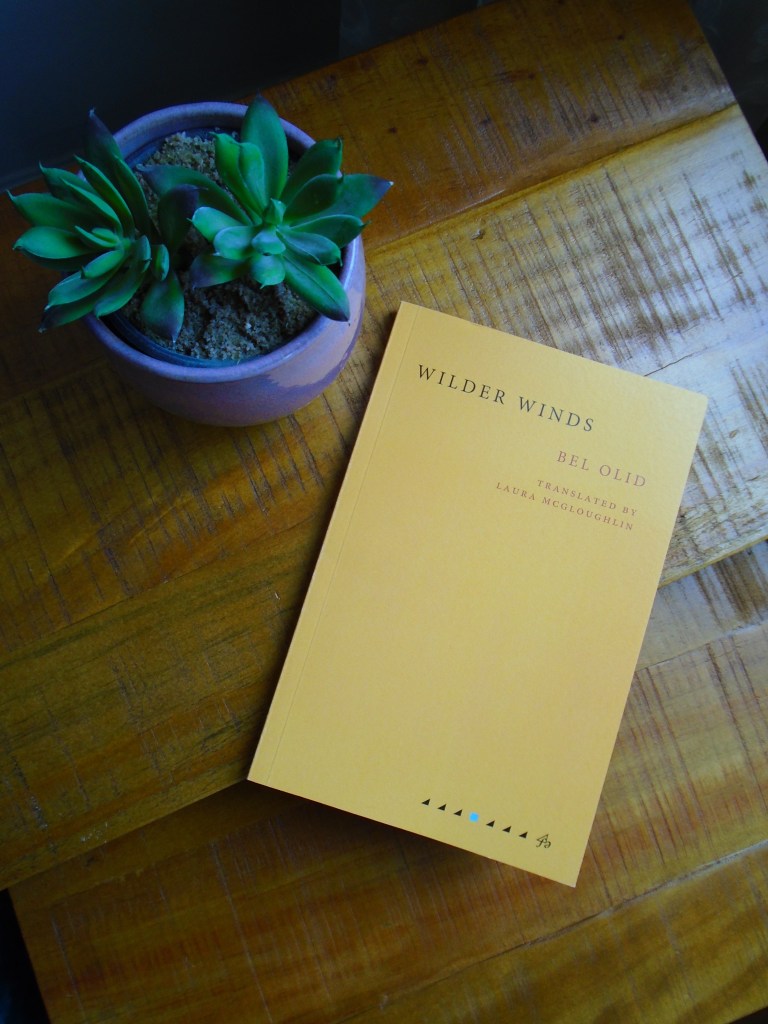
Review: Wilder Winds by Bel Olid

“Time passes like a veil that polishes your memories and makes them malleable”  

My favourite read of the year so far! This magnificent collection, eloquently translated by Laura McLoughlin, presents captivating fragments of its characters’ lives, delving into the innermost vulnerabilities of the individual, while also baring intimate truths of humanity as a whole.  

Wilder Winds – published by Fum D’Estampa Press

With short stories, no more than a few pages, Bel Olid pulls the reader to the brink of overwhelming tragedy but never completely over the edge; they are always salvaged by pockets of hope, moments of quiet defiance: gifted bunches of toadflax, morning coffee savoured while listening to the radio, a dip in the bluest of seas. This resilience threads itself throughout the book, bold in the face of suffering – as the narrator of ‘Cabaret’ muses, “life is stubborn and we cling to it even when it hurts to live’.  

Bearing pain, both physical and emotional, is an integral element across the collection. Almost every story is set against the backdrop of a historical conflict, from Lithuania’s Singing Revolution in ‘Dainuojanti Revoliucija’ to the worlds of Venezuela, Spain and New York drawn together in ‘Linda’. ‘Baba Luba’ takes place in Ukraine, amidst the civil unrest of 2014 and, though first published in 2016, this story’s current poignance is startlingly.  

Yet, we are continually reminded that the characters are not defined solely by their circumstances, as universal themes of loneliness, love, loss and friendship are addressed. The narratives shine a stark light on issues of gender politics, migration and social violence. Human connection in varying forms, across generations and continents, can be found at book’s core – exemplified in ‘Anna, Anne, Anna, where a young girl finds understanding in the words of Anne Frank. Often, in fact, the author focuses their lens on the young, raising questions as to how their lives will be affected by these formative experiences, marred by intense hurt, guilt or violence. We are left, however, reassured of their resilience, of the place they will carve out in an uncertain future.  

Wilder Winds is a gathering of deft, affecting narratives that are together enduring and unique. Olid’s talent for revealing whole lives through the keyhole of one particular moment is exceptional; pervading truths, some cruel, some delightful, are exposed in as little as two pages. I couldn’t phrase it any better than Marta Rojals – ‘Bel Olid tells you the most terrible things in the most beautiful way”.  

https://tinyletter.com/theindieinsider/letters/issue-19-short-and-sweet

This month’s Indie Insider theme is ‘Short and Sweet’, also featuring the minis series from Red Circle Press, Love Stories for Hectic People by Catherine McNamara and some exciting news from Peirene Press!

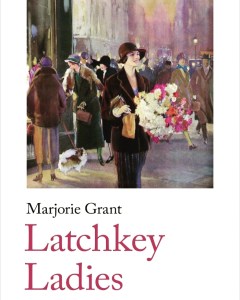
Review: Latchkey Ladies by Marjorie Grant

https://tinyletter.com/theindieinsider/letters/issue-18-all-about-love

 ‘Latchkey ladies, letting themselves in and out of dismal rooms, being independent and hating it. All very well for people with gifts and professions, artists or writers. But for us, the ordinary ones, a latchkey is a terrible symbol …’  

First published in 1921, this edition of Marjorie Grant’s Latchkey Ladies is the next in the Classics series from Handheld Press, reviving forgotten works of fiction that have fallen undeservedly out of print.  

Detailing the lives of several so-called ‘latchkey ladies’ living in wartime London, Grant writes polemically. The novel is laden with caustic cultural critique and sharp social observation; musing on the habits of writers, for instance, she observes ‘They either told you carefully rehearsed impromptu stories that were good enough, or else they sat in anxious and jealous silence afraid of losing money or reputation by giving away an idea or a phrase’.

For the main characters, their keys to rented rooms are emblems of both independence and instability, set against a backdrop of war that feeds each element and amplifies their contradictory position. The story’s premise and tone reminded me of another post-war narrative, Mary McCarthy’s The Group, instead set in 1950s New York. Both authors, through characters like Anne and Lakey, present cynical world perspectives; the girls are prone to premature judgement in their detailed, witty but often damning descriptions of those they encounter. The Group itself inspired Candace Bushnell’s Sex and the City and it is easy to draw certain parallels between the three works; shared themes of marriage, children and female friendship are addressed with alternating humour and gravitas.  

Despite initial perceptions, Latchkey Ladies is not the novel of female empowerment you might expect. For the majority of the women, spanning a range of ages and experiences, this rootless lifestyle is borne of economic necessity rather than conscious choice, though this does not negate a degree of snobbery at the Mimosa Club. Far from relishing the independence a latchkey life allows, the overwhelming sense is that the residents would trade such freedom for the solace of their own home, and that the easiest way, often the only way, for a young woman to achieve this is through marriage. Grant does note that desire for the stability of marriage is not an exclusively female trait, as Dampier muses “it is not only women who marry for a home”. However, her novel indicates that, in the eyes of society, even “a bad marriage is better than no marriage for a woman”, and for the young female characters, an ill-suited match is certainly deemed preferable to the alternative – spinsterhood.  

It is perhaps this tension that provokes conflict between the older and younger generations, each prone to make disparaging comments about the other. Female camaraderie within the spheres of the novel is flimsy at best, yet the latchkeys unite in their rejection of women sitting outside the realms of respectability, like Reggie. Thankfully, however, there is warmth and loyalty to be found in the friendship between Maquita and Anne, undoubtedly the most enduring relationship of the novel.  

Additional thoughts*:

*couldn’t fit everything into the review 😅

  • There is certainly an argument to present this as a novel of female camaraderie but I struggled with how swiftly this purported solidarity dissolved in the face of any perceived impropriety.
  • Throughout, there is an uncomfortable, pervading obsession with ‘the right type’ or ‘our sort’ of people, even from the younger girls who otherwise pride themselves on being more liberal than the likes of Mrs Bridson.
  • However, this concern with manners and ‘correct’ behaviour doesn’t seem related to money, as we see in the case of Miss Pratt and her paid companion, Miss Denby – “the victims of Miss Pratt’s tongue said that it was easy to see which was the lady.” This non-pecuniary classism is the foundation of the Mimosa Club, designed to give “poor people who think they are a little too exclusive for ordinary boarding houses the illusion of privacy and comfort”. 
  • It struck me that the none of the male characters seem particularly happy or settled either: Robert is paranoid, Thomas is bitter and Dampier is contrary and dissatisfied.

If anyone else has read this one, I’d be very interested to hear your opinions! I still can’t decide if I liked it …

Rating: 3 out of 5.

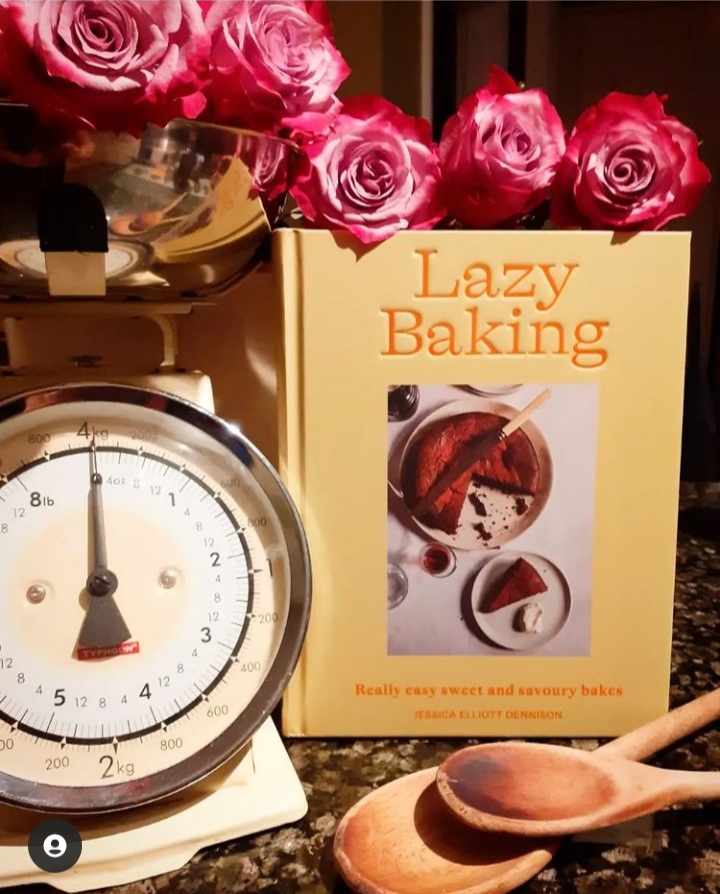
Review: Lazy Baking by Jessica Elliot Dennison

“I’m a home cook. So when it comes to baking, my approach means minimal fuss, yet comforting and delicious …”

Jess’s ‘no frills’ attitude is refreshing, with a focus on flavour, not aesthetics; it doesn’t matter if your end result looks like a Picasso, as long as it tastes great (though her bakes all look pretty yummy too)!

Read the rest of my review in the latest Indie Insider newsletter https://tinyletter.com/theindieinsider/letters/issue-17-comfort-reading

Other Featured Reviews and Spotlights:

Flèche by Mary Jean Chan (Faber)

The Life of the Mind by Christine Smallwood (Europa Editions)

Do Pause: You Are Not a To Do List by Robert Poynton (The Do Book Company)

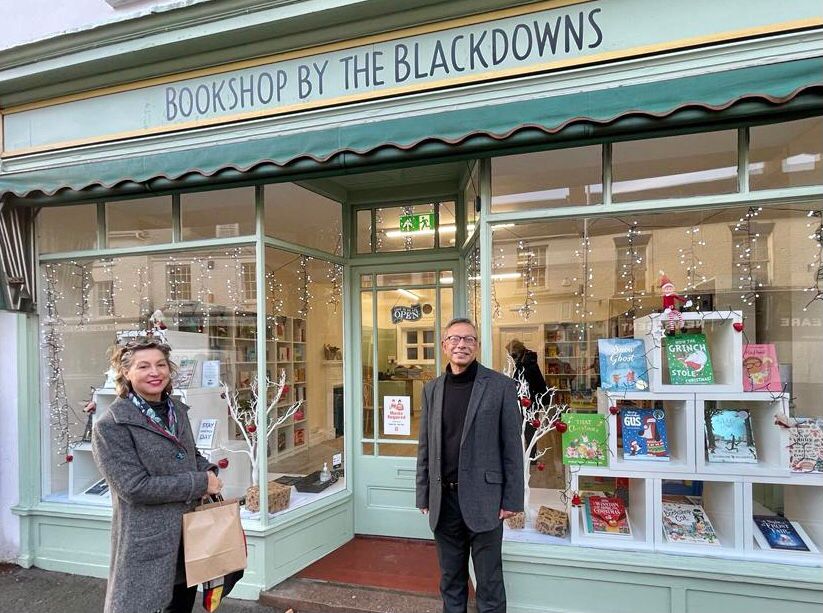
Indie publisher Barrington Stoke and the fab Bookshop by the Blackdowns

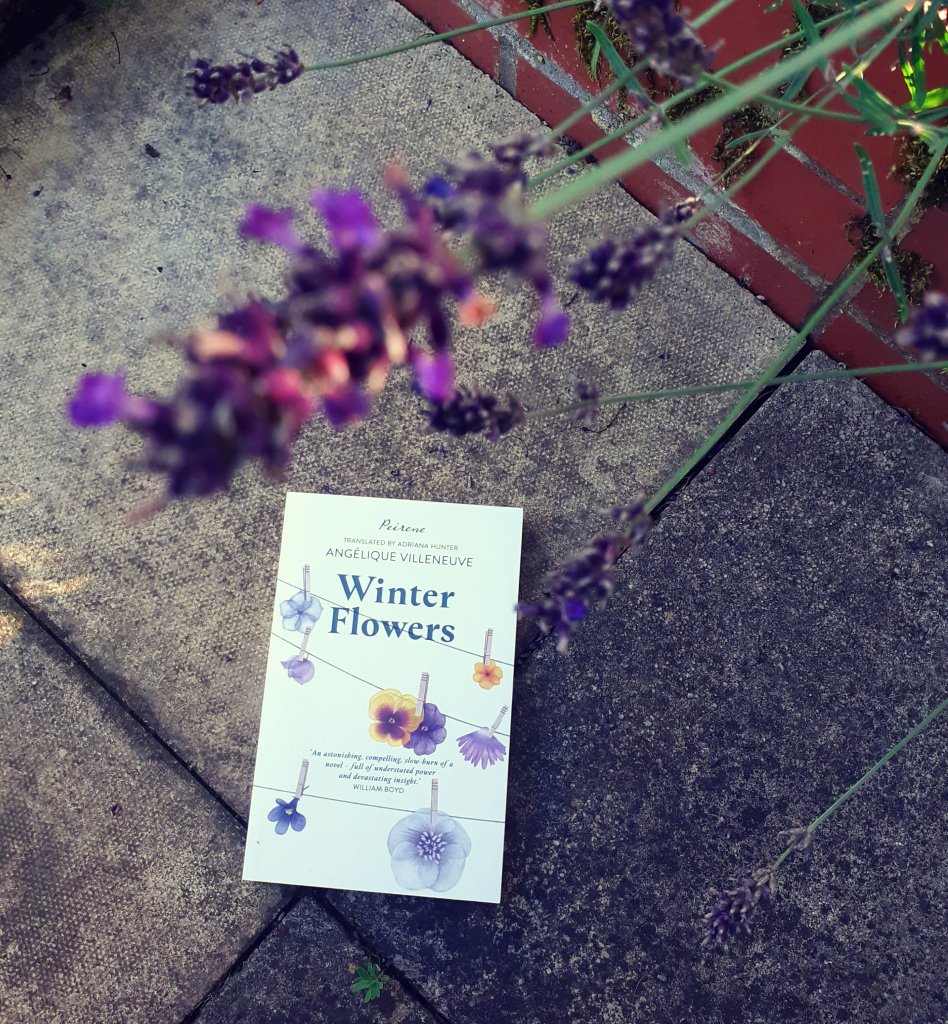
Review: Winter Flowers by Angélique Villeneuve

It is seldom that I’ve read such a short, simple book that has stayed with me so persistently after the final page.

Winter Flowers (Les Fleurs d’hiver), translated from the French by Adriana Hunter, is a subtly nuanced family drama, set against the backdrop of war-stricken Paris. For two years, Jeanne Caillet and her young daughter Léonie have lived alone within the walls of their small apartment, surviving food shortages and bitter winters on the paltry sum Jeanne collects for the exquisite artificial flowers she crafts.

‘When making flowers, Jeanne metamorphoses into an incredibly self-possessed creature whose focus, skill and attention to detail enthral anyone who has the opportunity to watch her work. She can make 900 cowslip flowers in a day. Her hands produce improbable tea roses as opulent as lettuces, explosive swells of petals speckled with a shimmer of blood red or cherry red. She conjures up clusters, stalks and ears, umbels and flower heads, all more beautiful and more real than the real thing.’

The return of Toussaint, her husband, from the facial injuries ward of a military hospital unsettles this difficult but established routine, bringing new challenges and conflicting emotions into their lives, as they must learn once more to be a family of three. For Jeanne in particular, overwhelming relief is distorted by frustration, confusion and hurt. Guilt contributes to this precarious cocktail of feelings in the wake of her neighbour, Sidonie’s, tragedies and palpable fear courses throughout the novel, intensified by stark reminders of brutal wartime realities.

In my opinion, the real triumph of this novel is its simplicity; the plot is as delicate as the silken flowers that pass through the flower maker’s hands. Significance is woven into the fabric of the book not by dramatic events but by the characters’ emotions, most of which are speculated by Jeanne; though third-person, the narrative threads centre around her thoughts.

One motif I particularly enjoyed was the parallels drawn between Toussaint and the flowers. His eyes are ‘of a blue that hovers between nigella and chicory’ and careful details of his surgeries are interlaced with the creation process.

‘In two separate incisions, one on the inside, the other outside, the edges of the aperture and the whole fibrous mass are excised. / Hyacinths come in soft, subdued colours: blue, mauve, pinkish and red are achieved with rinses from various concentrations of lapis lazuli, crimson lake, magenta lake or carmine. / Using a buttonhole incision made in the cheek, a scalpel is introduced flatways from front to back under the integument.’

The titular flowers feature heavily throughout, gossamer and impossibly beautiful, an focal point around which all other elements revolve.

‘Her first cornflower in silk muslin, then a peony, a camellia, a Chinese primrose, sweet peas, a hyacinth, six different varieties of rose, lilac, clematis […] and an intricately veined lily. Lolling over to one side there’s even a poppy with a contorted stem and petals in a spectacular orange, as vibrant as poison’.

Winter Flowers is the first of Villeneuve’s novels to be translated into English, having already won an array of French literary prizes. It is the fifth work Adriana Hunter has completed for Peirene, joining titles such as Véronique Olmi’s Beside the Sea and Her Father’s Daughter by Marie Sizun.

The novel will be part of the newly announced Borderless Book Club Autumn Programme, on the 21st October.

Be sure to catch up with the latest Indie Insider issue to read my interview with Stella Sabin, publisher at Peirene Press!

Rating: 4 out of 5.