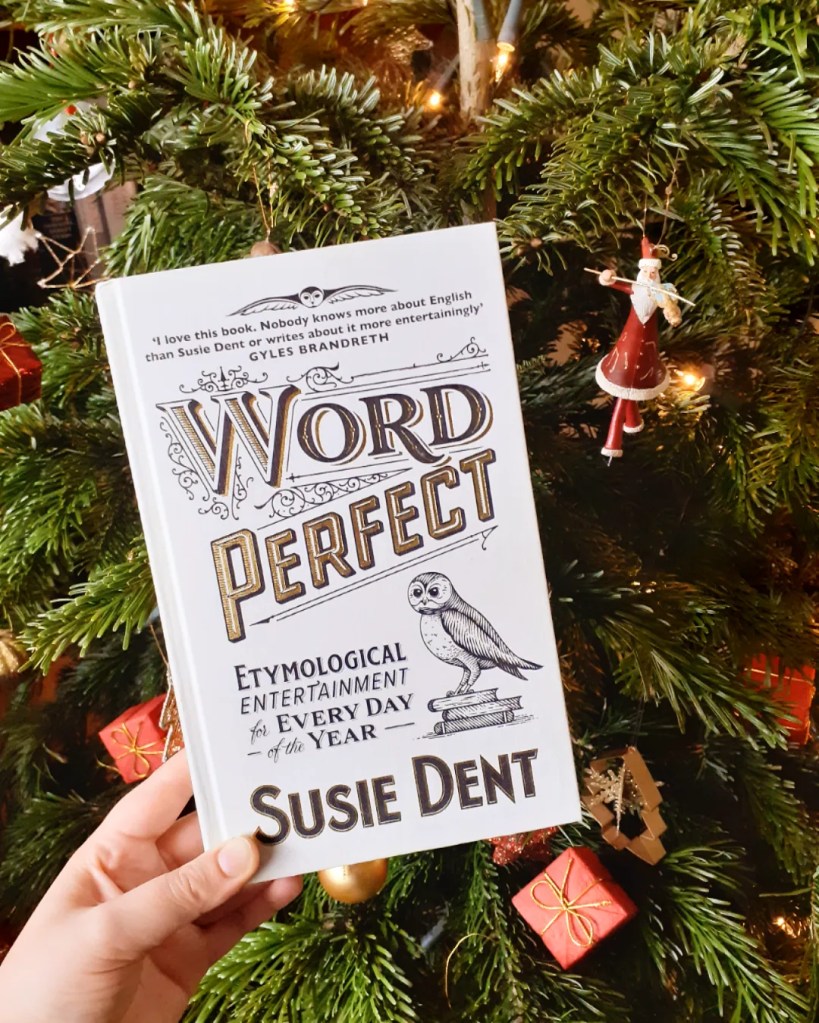
Word Perfect – October/November/December

Finally reached the end of a very lexically-laden year here at Bookishly Abroad, thanks to the marvellous Susie Dent. If you’ve enjoyed my picks, I cannot recommend the whole book enough!

I hope you all had a very merry Christmas and here’s to a brilliant 2022! 🥂
October:

1st – INWIT – refers to common sense or ‘inbuilt wisdom’. The total opposite of nitwit …

6th – SILVER SCREEN – now a metonym for cinema in general, originating from the earliest projectors screens, which were coated in silver paint.

12th – UNASINOUS – from one 1656 entry in the OED, meaning ‘united in stupidity’. I’m sure I’ll be finding a use for this one!

16th – FAN-BLOODY-TASTIC – the meaning is clear but I had no idea these infixes have a name in linguistics. The process of inserting one word into the middle of another is called ‘tmesis’, from the Greek ‘to cut’.

17th – CUDDLEMEBUFF – an excellent slang term for liquor.

22nd – CORONACOASTER – one of the many pandemic-born additions to our vocabulary, making it sound considerably more fun than it has been …

November

4th – EXSIBILATE – a neighbour of ‘booing’, this Latin word means to hiss an inadequate performer off the stage.

12th – POWWOW – borrowed from Algonquian, this comes from the name of a sacred Native American ceremony that often features dances, singing and vibrant traditional dress.

16th – JACK THE LAD – the namesake of this idiom was Jack Sheppard, a thief and folk hero of the 1700s, known and celebrated for his daring prison escapes. He was referred to affectionately by this moniker or, ironically, ‘Honest Jack’.

19th – PERISSOLOGY – put succinctly, using far more words than necessary!

25th – SPHALLOLALIA – the original working title for Tinder … From the Greek for ‘stumble-talk’, Susie defines this as “flirtatious talk that goes absolutely nowhere”.

December

12th – THROTTLEBOTTOM – an incompetent, bumbling individual in public office. The book uses Boris Johnson as its example …

16th – ZHUZH – to make something more lively or exciting. I’ve only heard this one used relating to hair and must never have written it down; before now, I wouldn’t have had an orthographical clue!

18th – BRUME – a winter mist.

20th – QUAFFTIDE – very aptly for December, the OED defines this as ‘the season for drinking’.

22nd – SCURRYFUNGE – frantically tidying before the arrival of guests. Also appropriate for this month in particular.

25th – CONFELICITY – finding joy in the happiness of others. The antonym of ‘schadenfreude’.

28th – MERRYNEUM – the endless stretch between Christmas and New Year when we’re lost in a blur of alcohol, leftover turkey and sitcom repeats. Also known as ‘Twixtmas’ or ‘Chrimbo Limbo’.

xxx

P.S. I got another of Susie’s books, What Made the Crocodile Cry?, for Christmas so I’m afraid my fangirling is far from over!
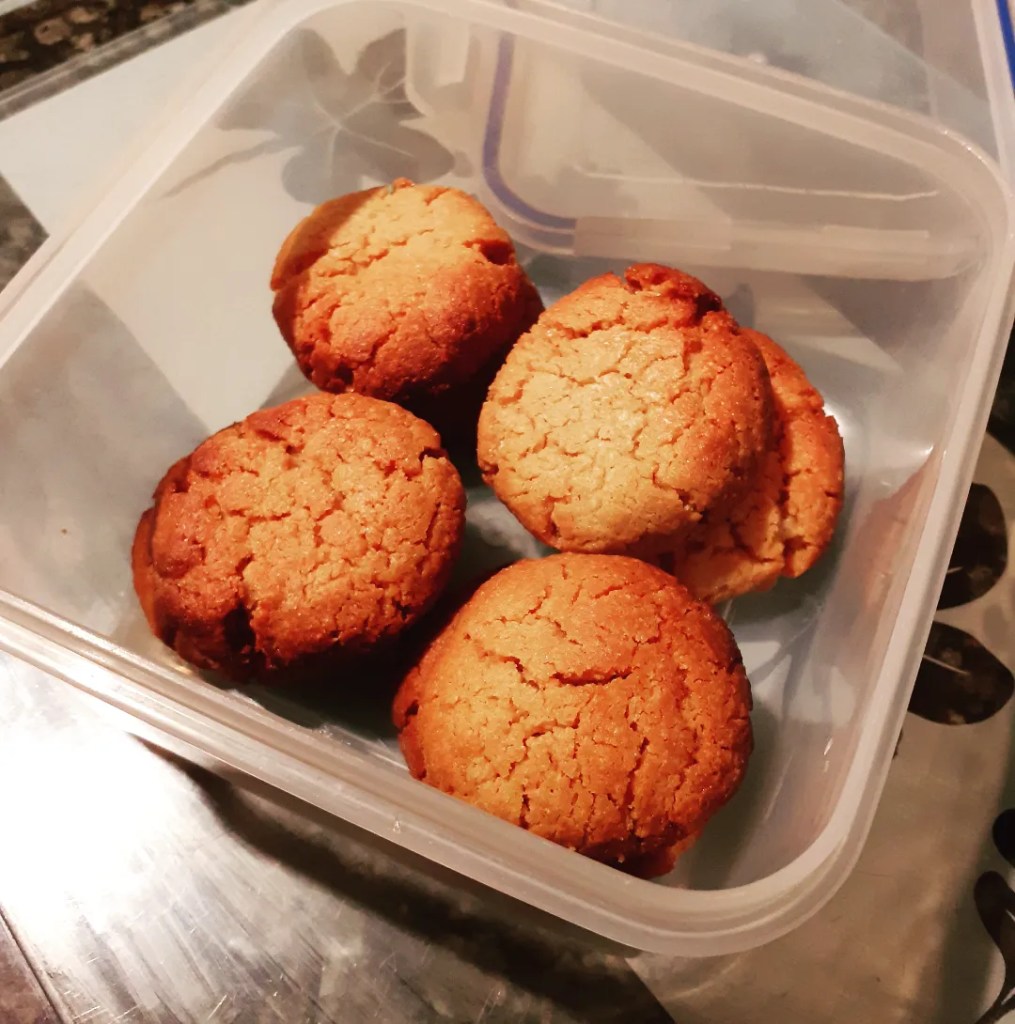
One-Jar Peanut Butter Cookies

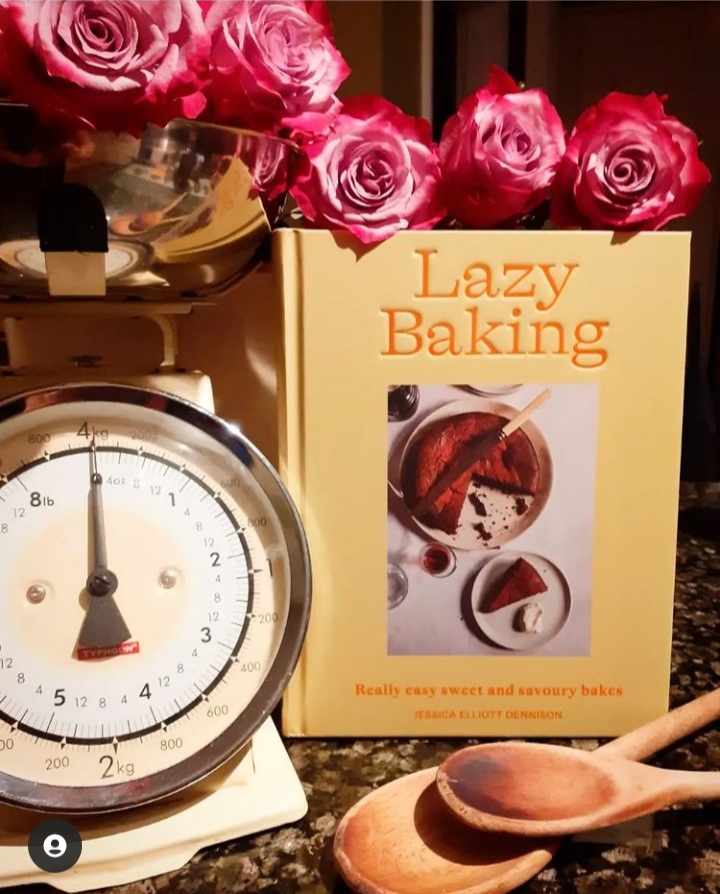
From the brilliant Lazy Baking by Jessica Elliot Dennison (see previous post!)

Makes 12
10 mins preparation, 12 mins baking time
Ingredients:
• 1 x 225g jar of good-quality peanut butter (crunchy or smooth, ideally 100% peanuts with no other additives)
• Pinch of sea salt flakes
• ¾ jar of caster sugar
• 1 egg
Method:

  1. First, preheat the oven to 180˚C fan (400˚F/gas 6) and line a baking tray with baking paper.
  2. Using a wooden spoon, stir together all the ingredients in a large mixing bowl to make a smooth paste. Once the dough comes together it will suddenly transform into a dry texture – that’s when you know it’s ready to roll out.
  3. Roll the dough into 12 walnut-sized balls and transfer to the lined baking tray, leaving space between each one to allow for spreading. Bake for 12 minutes in the preheated oven. Leave to cool for a couple of minutes before eating.
  4. These cookies keep well in an airtight container for a couple of days … but good luck with that!
    Optional extra – pop some raspberry jam or chocolate in the centre just before they go in the oven!

Review: Lazy Baking by Jessica Elliot Dennison

“I’m a home cook. So when it comes to baking, my approach means minimal fuss, yet comforting and delicious …”

Jess’s ‘no frills’ attitude is refreshing, with a focus on flavour, not aesthetics; it doesn’t matter if your end result looks like a Picasso, as long as it tastes great (though her bakes all look pretty yummy too)!

Read the rest of my review in the latest Indie Insider newsletter https://tinyletter.com/theindieinsider/letters/issue-17-comfort-reading

Other Featured Reviews and Spotlights:

Flèche by Mary Jean Chan (Faber)

The Life of the Mind by Christine Smallwood (Europa Editions)

Do Pause: You Are Not a To Do List by Robert Poynton (The Do Book Company)

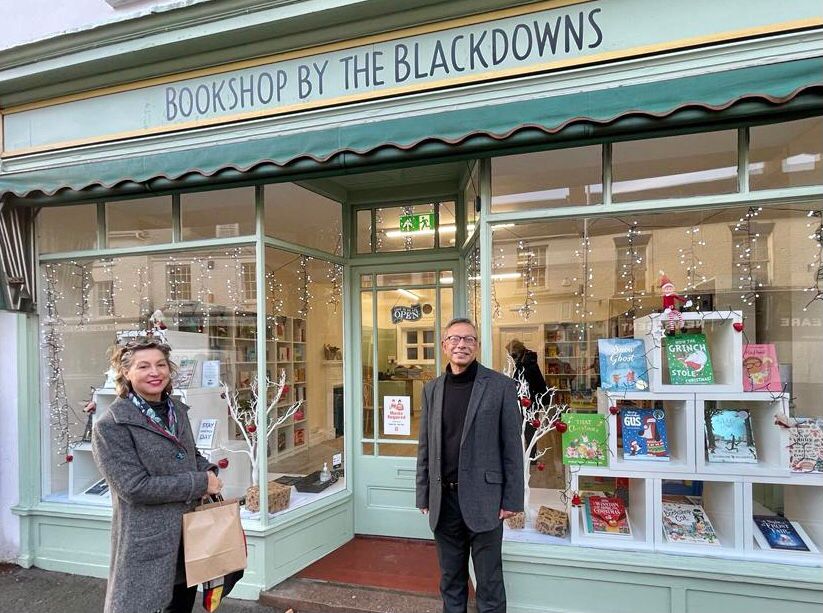
Indie publisher Barrington Stoke and the fab Bookshop by the Blackdowns

Word Perfect – August/September

A few linguistic gems selected from Queen Susie’s August and September offerings:

August

2nd – TESTICULATING – gesturing dramatically while talking absolute bollocks. One of many ‘blended’ words recently entering our lexicon, joining ‘hangry’ and ‘textpectation’. Apparently, The Washington Post also runs a competition to create new vocabulary by altering only a single letter of an existing word. One that needs to be added to the dictionary immediately is ‘sarchasm’, the gulf between the individual delivering sarcastic comments and an intended recipient who remains oblivious.

7th – CONSPUE – a niche (and gross) verb meaning to spit on someone with contempt.

10th – THE FULL MONTY – supposedly due to General Bernard Montgomery, an eccentric commander during the Second World War, who favoured a full English breakfast (‘the full works’) each morning. This origin is contested, but remains by far the most popular story.

17th – RHOTACISM – those unable to correctly pronounce the ‘r’ sound suffer from rhotacism, an arguably cruelly spelt diagnosis …

20th – HALCYON – tranquil and happy (usually referring to ‘days’). From the Greek myth of Alcyone who, upon drowning, was transformed by the gods into a kingfisher. Divine intervention from her father, Aeolus, god of the winds, allowed her to build her nest each year on calm waters untroubled by storms.

31st – ZWODDER – the perfect adjective for hot summer days – a drowsy state of mind and body, plausibly caused by daytime drinking.

September

2nd – MUBBLE FUBBLES – the melancholic feeling on a Sunday evening or at the end of a holiday, as a return to work looms.

4th – GENERCIDE – becoming generic. Often used to refer to brand names that have become synonymous for the service they offer e.g. Hoover, Band-Aid, Blu-Tack and Google.

9th – SLOGAN – from the Scottish Gaelic, sluagh-ghairm (war cry).

12th – CONKER – a major player in the autumnal lexicon, most likely from a dialect word for snail shell. Perhaps not the most gripping origin story but I had to include this one, as the explanation points out that the winners of conker games are know as ‘conkistadors’!

18th – GOSSAMER – a satisfying sibilant addition, thought to be a shortened version of ‘goose-summer’, referring to the popularity of goose in the autumn months.

25th – BOONDOGGLE – any project that is completely unnecessary or a total waste of time.

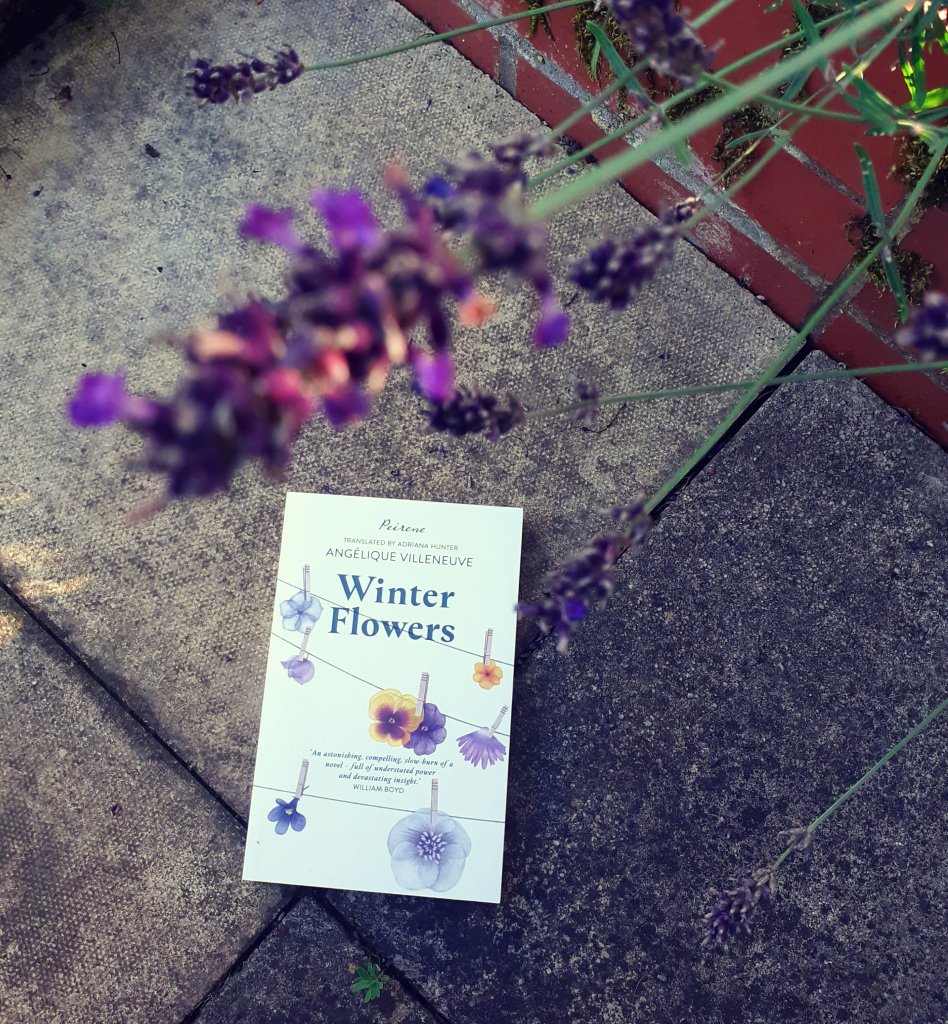
Review: Winter Flowers by Angélique Villeneuve

It is seldom that I’ve read such a short, simple book that has stayed with me so persistently after the final page.

Winter Flowers (Les Fleurs d’hiver), translated from the French by Adriana Hunter, is a subtly nuanced family drama, set against the backdrop of war-stricken Paris. For two years, Jeanne Caillet and her young daughter Léonie have lived alone within the walls of their small apartment, surviving food shortages and bitter winters on the paltry sum Jeanne collects for the exquisite artificial flowers she crafts.

‘When making flowers, Jeanne metamorphoses into an incredibly self-possessed creature whose focus, skill and attention to detail enthral anyone who has the opportunity to watch her work. She can make 900 cowslip flowers in a day. Her hands produce improbable tea roses as opulent as lettuces, explosive swells of petals speckled with a shimmer of blood red or cherry red. She conjures up clusters, stalks and ears, umbels and flower heads, all more beautiful and more real than the real thing.’

The return of Toussaint, her husband, from the facial injuries ward of a military hospital unsettles this difficult but established routine, bringing new challenges and conflicting emotions into their lives, as they must learn once more to be a family of three. For Jeanne in particular, overwhelming relief is distorted by frustration, confusion and hurt. Guilt contributes to this precarious cocktail of feelings in the wake of her neighbour, Sidonie’s, tragedies and palpable fear courses throughout the novel, intensified by stark reminders of brutal wartime realities.

In my opinion, the real triumph of this novel is its simplicity; the plot is as delicate as the silken flowers that pass through the flower maker’s hands. Significance is woven into the fabric of the book not by dramatic events but by the characters’ emotions, most of which are speculated by Jeanne; though third-person, the narrative threads centre around her thoughts.

One motif I particularly enjoyed was the parallels drawn between Toussaint and the flowers. His eyes are ‘of a blue that hovers between nigella and chicory’ and careful details of his surgeries are interlaced with the creation process.

‘In two separate incisions, one on the inside, the other outside, the edges of the aperture and the whole fibrous mass are excised. / Hyacinths come in soft, subdued colours: blue, mauve, pinkish and red are achieved with rinses from various concentrations of lapis lazuli, crimson lake, magenta lake or carmine. / Using a buttonhole incision made in the cheek, a scalpel is introduced flatways from front to back under the integument.’

The titular flowers feature heavily throughout, gossamer and impossibly beautiful, an focal point around which all other elements revolve.

‘Her first cornflower in silk muslin, then a peony, a camellia, a Chinese primrose, sweet peas, a hyacinth, six different varieties of rose, lilac, clematis […] and an intricately veined lily. Lolling over to one side there’s even a poppy with a contorted stem and petals in a spectacular orange, as vibrant as poison’.

Winter Flowers is the first of Villeneuve’s novels to be translated into English, having already won an array of French literary prizes. It is the fifth work Adriana Hunter has completed for Peirene, joining titles such as Véronique Olmi’s Beside the Sea and Her Father’s Daughter by Marie Sizun.

The novel will be part of the newly announced Borderless Book Club Autumn Programme, on the 21st October.

Be sure to catch up with the latest Indie Insider issue to read my interview with Stella Sabin, publisher at Peirene Press!

Rating: 4 out of 5.

Word Perfect – June/July

Unfortunately, Susie fell to the wayside over the summer in favour of other holiday reads. But we’re back with the best of June and July, at the beginning of September …

June

6th – SNOUTFAIR – the 1600s version of ‘fit’ or ‘attractive’, though it doesn’t sound it!

8th – NEWSPEAK – Dent draws a sly connection between Orwell’s censored language and Trump’s “fake news”/”alternative facts”.

10th – THEIST – ‘believer’, but its secondary meaning is far better. Apparently, Percy Bysshe Shelley liked to refer to himself by this moniker, with the intended sense of ‘a tea-drinking addict’. In this context, I am most certainly not an atheist!

13th – CLATTERFART – a serious gossip.

17th – BUMF – short for ‘bumfodder’; loo roll.

24th – CHOREOMANIA – an uncontrollable urge to dance. It is thought this phenomenon was responsible for the so-called ‘dancing plagues’ of the Medieval period. Clare Testoni discusses the connection between these and the tale of The Pied Piper in her brilliant podcast, Singing Bones.

30th – SCONE – must admit I was a little grumpy with Susie after this one. She graciously refuses to come down on either side of the argument, stating it’s ‘all a matter of taste’. According to the OED, both pronunciation variations are correct …

July

1st – CWTCH – I lived in Wales for a few years and this was one of my favourites. Mostly used to mean a cuddle but it can also be a safe, cosy place.

12th – LACKADAISICAL – apathetic, without motivation, careless.

17th – FIRGUN – the exact opposite of ‘Schadenfreude’. A recent Hebrew word meaning to find joy in another’s success. Dent quotes another author who aptly describes it as ‘the art of tooting someone else’s horn’.

24th – ZEPHYR – a gentle breeze. Named after Zephyrus, the Greek god of the west wind.

31st – PETRICHOR – the smell of rain, specifically falling on dry earth. I think ‘apricity’ has some competition.

Women in Translation Month

It’s August, which means Bookstagram is full of incredible Women In Translation Month features! As someone who avidly reads both translated fiction and work by women writers, it’s like Christmas come early (to the extent that I briefly considered adding ‘It’s the Most Wonderful Time of the Year’ as a backing track for this post …)

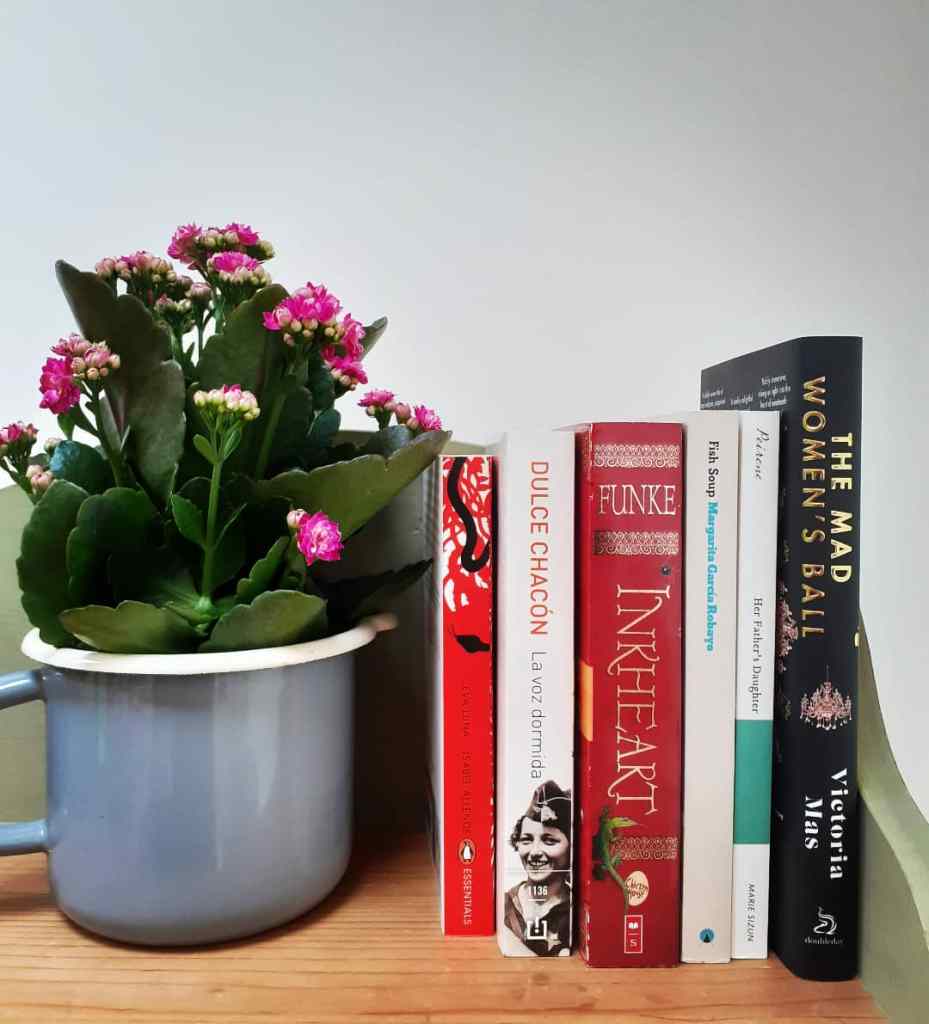
Here are just a few of my own picks:


🇨🇱 Eva Luna – Isabel Allende (transl. Margaret Sayers Peden)

This has been on my TBR list of a while, ever since I read and loved The House of Spirits. Allende’s prose is beautiful – I always find myself utterly immersed in the worlds she creates.

‘My name is Eva, which means “life”, according to a book of names my mother consulted. I was born in the back room of a shadowy house, and grew up amidst ancient furniture, books in Latin, and human mummies, but none of those things made me melancholy, because I came into the world with a breath of the jungle in my memory.’


🇪🇸 The Sleeping Voice/La voz dormida – Dulce Chacón (transl. Nick Caistor)

This is severely underrated novel – if you are a fan of historical fiction, I cannot recommend it enough! Set in a women’s prison during the the Spanish Civil War and based on historical accounts, it follows the lives of Hortensia and her fellow inmates, deftly switching between timelines and characters to reveal a wider picture of the horrors many suffered at this time. I first read it in English translation at university and was blown away by the emotional impact of Chacón’s writing.

I only have the Spanish copy as I am now attempting (with varying degrees of success) to read it again in the original, but the English version is widely available and a must-read!


🇩🇪 Inkheart/Tintenherz – Cornelia Funke (transl. Anthea Bell)

A childhood favourite – every bookworm I know would give a right arm to enter their favourite fictional worlds. Premise aside, Cornelia Funke is a natural-born fantasy writer and Anthea Bell’s translation is beautifully fluid. Once you’ve raced through this trilogy and have been firmly converted to a fervent Funke fan, there’s also The Thief Lord and Dragon Rider awaiting you.


🇨🇴 Fish Soup – Margarita García Robayo (transl. Charlotte Coombe)

Another TBR that I’m very excited for! I have followed Charco Press for a while now; their work bringing Latin American authors to the forefront is incredible and I’m sure this is the first of many, many purchases.

“Throughout the collection, García Robayo’s signature style blends cynicism and beauty with an undercurrent of dark humour. The prose is at once blunt and poetic as she delves into the lives of her characters, who simultaneously evoke sympathy and revulsion, challenging the reader’s loyalties as they immerse themselves in the unparalleled universe that is Fish Soup” – https://charcopress.com/bookstore/fish-soup


🇫🇷 Her Father’s Daughter/ Le père de la petite – Marie Sizun (transl. Adriana Hunter)

I bought this immediately after finishing Adriana Hunter’s translation of Winter Flowers by Angélique Villeneuve, also published by Peirene. Upon reading the blurb, the premise is remarkably similar – a father returning home to his family and the ensuing complications, set against the backdrop of war-torn Paris. I like the subtilty of Winter Flowers so hopefully that bodes well.


🇫🇷 The Mad Women’s Ball/Le bal des folles – Victoria Mas (transl. Frank Wynne)

This was very much a “bookstagram made me do it” purchase. I am intrigued by the trope of women and madness; I read Gilbert and Gubar’s work cover to cover while studying and each fictional exploration of the topic brings a new perspective to light. Moreover, Gothic fiction is right up my street so tentatively hoping this one will be a 5* review.

“A darkly sumptuous tale of wicked spectacle, wild injustice and the insuppressible strength of women” – Emma Stonex, author of The Lamplighters

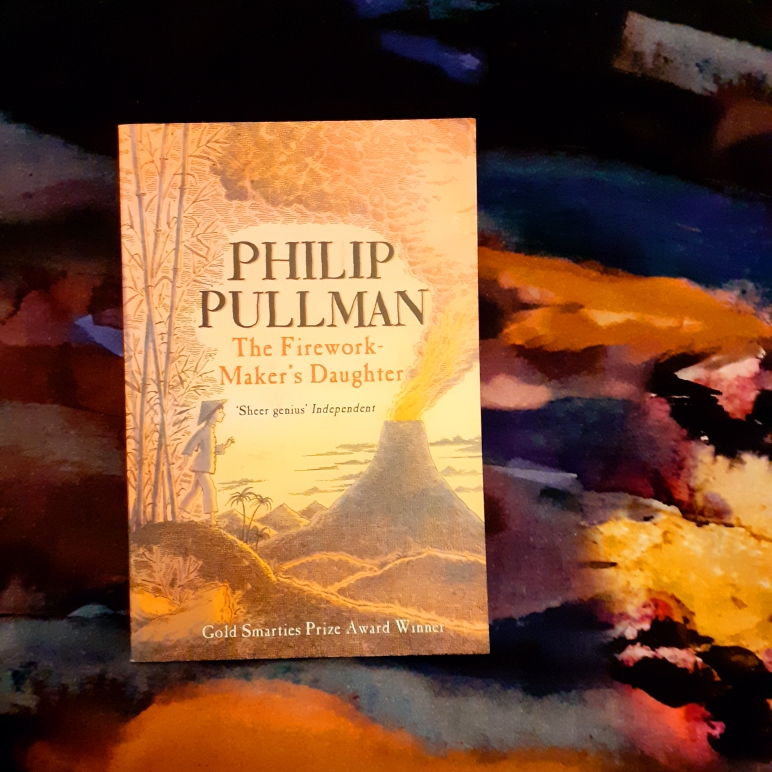
Review: The Firework-Maker’s Daughter by Philip Pullman

‘When she was old enough to learn, her father began to teach her the art of making fireworks. She began with little Crackle-Dragons, six on a string. Then she learned how to make Leaping Monkeys, Golden Sneezes and Java Lights. Soon she was making all the simple fireworks, and thinking about more complicated ones.’*

Lila has one wish: to be a Firework-Maker, like her father Lachland. To fulfil this, she sets off on the perilous journey to Mount Merapi, to obtain Royal Sulphur from the cave of Razvani, the Fire-Fiend. She navigates twisted jungle paths, outwits a bumbling group of river pirates/restaurateurs/barbershop singers and, with the help of her friends Chulak the Elephant Keeper and Hamlet, the King’s prized white elephant, returns to her hometown to save her father from certain death.

A magical, fairytale-esque account of determination, talking elephants and water goddesses, culminating in what must be the most enchanting firework display ever written!

‘Now the King of that country owned a White Elephant. It was the custom that whenever the King wanted to punish one of his courtiers, he would send him the White Elephant as a present, and the expense of looking after the animal would ruin the poor man; because the White Elephant had to sleep between silk sheets (enormous ones), and eat mango-flavoured Turkish Delight (tons of it), and have his tusks covered in gold leaf every morning. When the courtier had no money left at all, the White Elephant would be returned to the King, ready for his next victim.’

Paradoxically, I came to Philip Pullman’s children’s fiction as an adult, having read His Dark Materials as a child. Having read The Scarecrow and His Servant, Clockwork and now The Firework-Maker’s Daughter, I am impressed by the diversity of his writing style between the age groups. Just like this particular novel, I find his children’s fiction has a fable-like quality; there is a bedtime story tone to the tales (less so with Clockwork, due to the serious creepy factor …). Though also fantasy, His Dark Materials dismisses this in favour of a realist, borderline nihilistic style. The series is a masterpiece but sometimes a whimsical short story is needed – get you an author who can do both!

They looked at each other as if they were strangers. Each of them had had quite the wrong idea about things, and they were both alarmed to find it out.’

Rating: 4 out of 5.

* Loved the names ‘Tumbling Demons’ and ‘Shimmering Coins’ for her later inventions!

Word Perfect – April/May

A selection of April and May’s lexical offerings – I’ll pretend combining the two was a stylistic choice rather than an accidental necessity, as I forgot about April …

April

7th – HAIR OF THE DOG – turns out this one is decidedly literal! A shorted version of ‘a hair of the dog that bit you’ harking back to the medieval belief that once bitten by a dog, you could only be cured with a poultice containing one hair from the same animal. The entry also mention the delightful ‘wamble-cropped‘ as a synonym of ‘hangover’.

10th – COMET – one specific phrase springs to my mind considering the origins of this word – “it’s very Greek” (Julie Walters, Mamma Mia, 2008). It comes from ‘komētēs’, meaning ‘long-haired star’. As Dent points out , much of our astral vocabulary can be traced back to the language – with ‘asteroid’ indicating ‘star-like’ and ‘meteor’ originating from the word for ‘lofty’. Other little facts I liked from this entry were ‘astronauts’ as ‘star sailors’ and an asterisk as hte diminutive ‘little star’.

11th – ANTHOLOGY – a collection of flowers, used metaphorically to refer to various ‘flowers’ of verse/poetry in one volume.

15th – CONTRAFIBULARITY – insincere congratulations (literally invented by TV series Blackadder!)

19th – GHETTO – featured on this day in memory of the Warsaw Ghetto Uprising in 1943. It has two possible origins; the first ‘getto’, the Italian translation of iron foundry, as this was the area Venice’s Jewish population were banished to in 1516. The second possibility is ‘borghetto’, meaning ‘little suburb’.

23rd – BARDOLATRY – overzealous admiration of Shakespeare …

24th – GHOST – included for the pettiness! Apparently, this was originally spelled ‘gost’ but Flemish print workers added an ‘h’ because they didn’t like how it looked on paper.

27th – PANDEMONIUM – the capital city of Hell in Paradise Lost. Tickles me slightly that Milton thought devils would comply with human geographical convention.

May

4th – JEDI – for reasons obvious hopefully that are …

7th – WHITE ELEPHANT – any task or endeavour that it considerably more effort than it is worth! This entry includes the anecdote that the King of Siam used to gift an elephant to courtiers who had upset him; the animals were so expensive to care for that bankruptcy was a guarantee. Strangely, this exact fact features in my current read, The Firework Maker’s Daughter!

9th – HUGGER-MUGGER – to do something secretively. An example of what linguists call a reduplicated compound, like one of my preferred phrases, higgledy-piggledy.

15th – VOLCANO – another one rooted in mythology, this time Roman. Named after the god Vulcan, associated with fire.

22nd – ABSQUATULATE – to leave abruptly. Apparently in the 1800s, there was a literal trend in America for making up stupid words – this fad also gave us ‘discombobulate’ and ‘skedaddle’, so can’t have been all that bad.

23rd – PICNIC – another gloriously petty one – my favourites. For IT departments, PICNIC as an acronym indicates ‘problem in chair, not in computer’ or rather, that the person asking for their technical expertise is a moron …

26th – COCKNEY – maybe this is commonly knowledge and I haven’t been paying attention but there is something poetically lovely in the idea you are only a true Cockney if born within earshot of the St Mary-le-Bow church bells.

27th – FUCK – naturally. I get the impression Susie really enjoyed writing this one 😂. Unsurprisingly known to linguists as one of the most versatile words in the English language.

Review: It’s a Sin

I came quite late to the party with Russel T Davis’ miniseries, It’s A Sin. You would need to live an internet-free existence to have escaped the online outpouring of love for the drama. As I do not, my expectations were high, and, even then, it exceeded them! The series extreme success is due to its witty script, phenomenal soundtrack and array of lovable yet imperfect characters, portrayed by an immensely talent cast; the audience connect with the storylines on a deeply human level. Crucially, the timing of its release was spot on. The series enters a society reconsidering its response to the AIDS crisis, and coming to terms with the full scale of its impact. The period is now far enough away to be analysed in hindsight, but not so historical as to be disconnected from our modern lives – my parents grew up seeing the AIDs tombstone advert on TV. Spotlighting the crisis now had prompted a new generation to ask questions, and older generations to reconsider their experiences. Simultaneously, though the two crises differ in many ways, this story hits a nerve in the context of the current pandemic.

What struck me most of all it how the conversations surrounding It’s A Sin has endured – a testament to its impact. In today’s world, new content has a limited shelf-life in the public sphere, often only a few weeks. Yet, months later, I am still talking about it and to people with whom I would not usually discuss such topics. The series has a place in the hearts of many and I have no doubt the conversation will continue.

Rating: 5 out of 5.