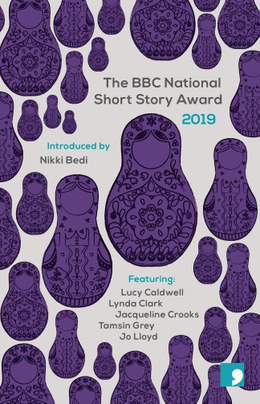
I’ve recently been listening to the previous shortlists for the BBC National Short Story Award – available here or on the BBC Sounds app – and I wanted to write some mini-reviews. More of task than I had previously considered as, with less content to comment on, it’s very hard not to give too much away …
Silver Fish in the Midnight Sea – Jaqueline Crooks
This presents a very deep sense of time and place – I was completely absorbed in it. Crooks tells the story of Ycara, Macca and Carlos existence in their garden, in silence as their mother sleeps for her nightshift, with the echoes of island life left behind and the haunting, but intangible presence of Soundghost.
‘She’ll be drifting soon, spliff burning. Dreaming she’s buried in the garden with termites and millipedes crawling over her face, leaving slime and white powder trails. Dream-travelling back to the starfish island she came from fifteen years ago. An island that erupted from sea crust millions of years ago. Raining nightfall ash’
The Children – Lucy Caldwell
An exploration of motherhood, loss and pain echoing through generations; the themes join together several seemingly unconnected stories. It’s told in three timelines, primarily that of the narrator, her family and hospital appointments. Through her research, this thread intersects with the life of Caroline Norton whose separation from her own children drove a lifelong fight for a change in custody laws and equality. She was also influential in the passing of the Marriage and Divorce Act in 1857. Between them, these two narratives make up the larger part of ‘The Children’ with only a small section dedicated to a third story, that of children separated from their families on the US-Mexico border. Yet it felt to me that this was the true centre of the story, accentuated using the familiarity of one perspective and the historical context of the other.
‘I’ve just come from Girton College, the first women’s college in Cambridge; dusty sunlight in high-ceilinged, book-lined rooms, parquet-floored corridors and a lunch buffet … A communal jug of tap water, tasting faintly of pewter. Polite tones in respectable surroundings; it all sounds eminently reasonable; ‘
‘The US president rants on Twitter, self-righteous or affecting outrage. I think of George Norton, suspicious, capricious, belligerent, ploddingly unintelligent. An ungovernable child, foaming and stamping and rambling from one accusation to another.’
My Beautiful Millennial – Tamsin Grey
Dido has recently moved to London and is finding city life not altogether as she expected. We learn of her dangerous encounter with a pigeon on the Underground and her unusual, disconcerting ‘friendship’ (of sorts) with Paul Fildes. At one point he refers to her as ‘[his] beautiful millennial’, a phrase which in context made my skin crawl. I didn’t connect with this one as much as some others, but this description of Dido’s ‘break-up’ outfit lives in my head rent-free …!
‘I have finally gone for my black velvet dress with the flouncy skirt, bottle-green tights and my lace-up boots. Amethyst lipstick. My strange curly hair in spikes. My Napoleon coat, black beret, black leather gloves. My green carpet bag, yes, the same green as my tights. Paul Fildes says I wear dressing up clothes, that it’s a sign of my arrested development. He has offered to take me shopping, but I am trying to disentangle myself from Paul Fildes‘
The Invisible – Jo Lloyd – WINNER
This was my favourite of the bunch, and (deservingly in my opinion) won the prize. Though you can read the stories in their respective anthologies, I would especially recommend listening to this one – Aimee-Ffion Edwards lilting Welsh accent brings a new dimension. The inhabitants of a small Welsh village become obsessed with stories of the Ingrams, the invisible family living an opulent lifestyle right on their doorstep. The lives of the Ingrams are relayed to the villagers through Martha, the only go-between connecting the two worlds, though doubts and aspersions are cast upon her truthfulness, which in turn provokes rising tension. Despite this, the fantasy of the ‘Invisible’ drags them through cruel winters and daily hardships. The detailed imagery of this story is utterly beautiful.
‘The Invisible do no work”. “But how can they live without the poor to serve them”, we ask. “What about the puddings”, says Eliza. “Are they spiced? Do they wobble? Are they eaten hot or cold?’
“They are baked puddings, and boiled puddings, and set puddings”, says Martha. “Wonderful domed and turreted puddings like palaces, thick with candied cherries and angelica. The custard is yellow as buttercups”
Ghillie’s Mum – Lynda Clark
Ghillie’s mum shape-shifts into different animals, seemingly without reason or much control. At first I was a little confused by this one; I wasn’t sure if these changes were metaphorical, intended to represent physical or emotional difference of some sort. However, it seems to be literal, in a semi-magical realism style where strange occurrences are accepted. You will enjoy reading this far more by temporarily suspending disbelief! Though usual, the story was poignant and very moving.
‘In those early days, as far as he could recall, it was only at bath time she was other animals. A baby elephant to squirt him with water from her trunk, a porpoise to bat his rubber duck around the bath with her domed head, a dumbo octopus making him laugh with her big, flapping earlike fins, and grasping his bath toys with her many arms.’
‘Ghillie assumed everyone’s mother was many things, and so didn’t worry about it at all for the first few years of his life, but when he started school, he realised his mum wasn’t like other mums. And that meant he wasn’t like other kids.’
 Bookishly Abroad