‘I spend the entire night shift feeling like water is gushing into the hull of my boat and the only thing on hand to bail it out with is a Sylvanian Family rabbit’s contact lens’.
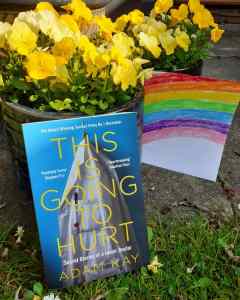
I loved this book; it’s been a while since I’ve read something that affected me so much. Hilarious and heartbreaking in equal measure.
It’s exactly the unique mix of humour and tragedy that make it so impactful. So many novels use both aspects, but very few intertwine them so closely. The switch flips paragraph to paragraph, often even within the same diary entry. Yet, this is not a contrived literary technique, designed to keep readers on their toes (though it still does just that). The entries simply reveal the daily ordeal of the job, an emotional roller-coaster.
Kay is an eloquent writer with a comedic gift, but the true master stroke of the book is his blistering honesty. Less ‘heart on the sleeve’, more (appropriately) ‘heart on the operating table’, each page lays it bare, acknowledging all aspects of the job and an individual’s reactions to it. The fact that the book was born of diary entries, left as they were originally written, means there isn’t a barrier of pretence. The thoughts and comments we read are unfiltered – ranging from the positive to the negative to the laugh-out-loud, wildly inappropriate. In the last section, Kay raises the point that patients, and indeed society as a whole, often don’t think of doctors as human beings, because they want to believe the person in charge of their medical care to be infallible.
‘They don’t want to think of medicine as a subject that anyone on the planet can learn, a career choice their mouth-breathing cousin could have made’.
I’d defy anyone to read this book and maintain that attitude.
Though I’m sure he would deny it, humble to the point of self-deprecation, Kay’s personality is a significant factor in the success of ‘This is Going to Hurt’. Doctors and other healthcare workers across the world no doubt have their own portfolio of revealing stories, but would they all be such compelling storytellers? Last year, I actually went to one of his book tour events and the tone of the book translates seamlessly across (he also adds a musical element to these shows, possibly the first author to debut the hybrid genre of medical-comedy song writing). It is his narrative voice that makes this diary so very unputdownable, making him just the person to navigate us through the good, the bad and the, frankly, downright disgusting elements of the job. The afterward of the book assures the reader the very worst entries were left out by the editor but even for those with the strongest stomachs, there are some memorably queasy moments (the decapitated Fireman Sam sponge springs immediately to mind …)
Part and parcel of the author’s character is the humour that runs throughout – the very blackest of threads. This, in Kay’s words, ‘gallows humour’ (uncomfortably apt in the context) appears throughout to be almost a prerequisite of the profession. The fact that the diary entries include so many light-hearted moments amongst patients and colleagues in some pretty dire situations is a testament to their resilience. But it is also a kindness to his audience. At one point, he talks about visiting a friend’s dad, dying of cancer in hospital. The man cracks jokes throughout the visit, which Kay labels a ‘kind and clever move’. Not only does put his visitors at ease but it serves the dual purpose of ensuring he is remembered as he was, full of life and laughs. Perhaps it’s not a perfect correlation but it seems that Kay uses humour in a similar way for his reader, to make the darker parts of the book easier to digest. There are certainly stories that you feel slightly guilty for laughing at, but the author is ahead of the game, having already made the joke and, in doing so, not only gives you ‘permission’ but actively encourages a chuckle. And there are some truly snort-laughter worthy moments – if you’re unlucky like I was, you’ll reach these moments when sat on embarrassingly crowded public transport …
The cynical would say that the effect of this hilarity is to increase the blindsiding effect of the desperately tragic moments. This is, of course, a side effect but it seems Kay’s intention is to show the reality in an honest light, but without entirely traumatising his readership – just enough to get the message across. We are spared the full impact.
Right now, there is an outpouring of love for the NHS – long may it continue – but Kay’s book highlights inherent, ingrained flaws in an overburdened system. The ridiculous hours, sleep deprivation, separation from loved ones and heavy emotional toll mean the frightening suicide statistics he includes are, sadly, unsurprising. Though also one of the wittiest books I’ve read recently, ‘This is Going to Hurt’ is ultimately an unselfish appeal for the improvement of working conditions for junior doctors. It promotes appreciation of a severely undervalued NHS, particularly poignant at this time of global crisis, and should be required reading for all.
‘Promise me this: next time the government takes its pickaxe to the NHS, don’t just accept what the politicians try to feed you. Think about the toll the job takes on every healthcare professional =, at home and at work. Remember they do an absolutely impossible job, to the very best of their abilities. Your time in hospital may well hurt them a lot more than it hurts you.’
N.B. And I DEFINITELY feel sorry for Jess, the poor publisher who had to proofread this book whilst heavily pregnant!
 Bookishly Abroad