The Handmaid’s Tale is one of the best books I’ve ever read, so needless to say I had high hopes for Margaret Atwood’s The Penelopiad.
I find tales from Greek mythology fascinating so the idea of this ‘rewrite’ was certainly intriguing. The basic premise is an alteration in narrative perspective of Homer’s The Odyssey to that of Penelope, the dutiful wife. Atwood also chooses to focus on the fate of the story’s twelve murdered maids the deaths of whom, in the original version, are merely mentioned, an afterthought.
She plays with the strangeness of Greek myths – the casual acceptance of the vindictive gods, divine beings who turn mortals to trees and swans for their own amusement, and then too with the expected etiquettes of an ancient patriarchal society, drawing parallels to the modern day.
However, unlike the writings of Homer, Atwood does not glorify her hero, or in this case heroine, above all else. Her Penelope is held accountable and human fault on all sides is thoroughly addressed.
A thought-provoking, humorous and enjoyable read.
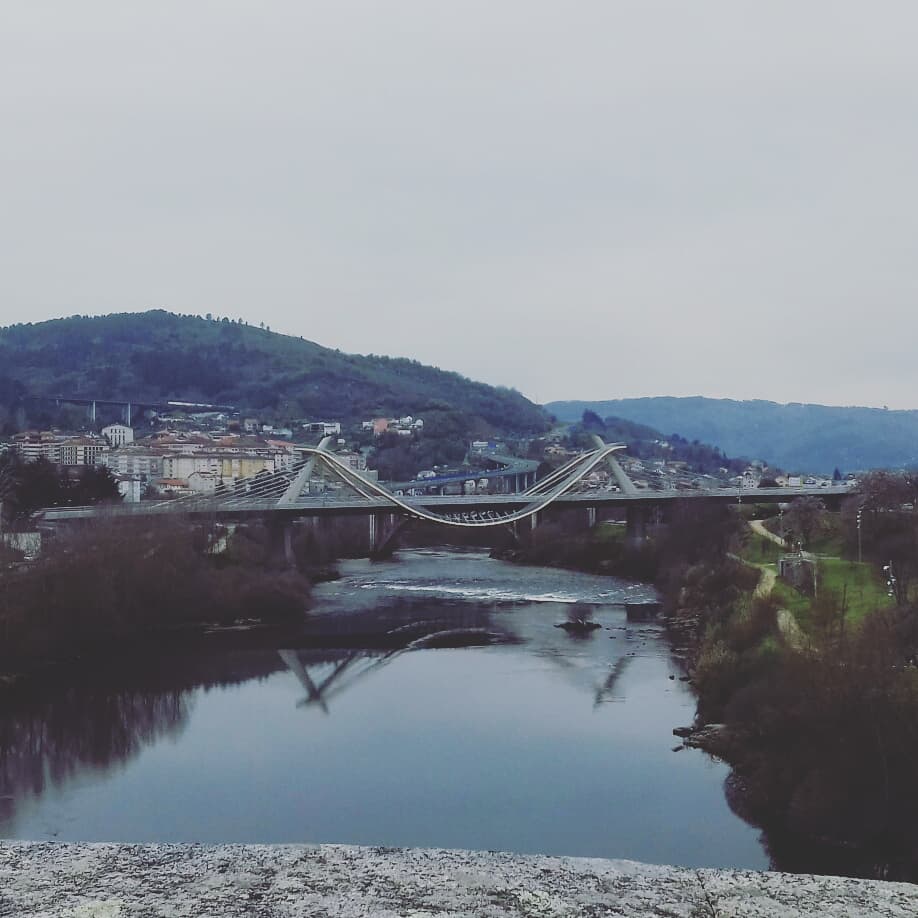
View from Ourense bridge
The Penelopiad was my reading material for both a trip to Pontevedra and Ourense, each as rainy as in Porto. On a sunnier day, Pontevedra would be a nice little day trip destination with a lovely old town, a few museums and a river walk.
Ourense itself we saw little of, though will be back in better weather for ‘termas’, hot springs surrounding the city. As we were there for Carnaval, we spent most of our time in the surrounding villages famous for their celebrations, Verin, Laza and Xinzo de Limia. These were unlike any event I’ve ever been to – strange traditions, delicious food and creative costumes – Entroido (Galician Carnaval) is a wonderful world of its own!
 Bookishly Abroad